
Activities for the 4th of July

Never miss a thing in your community

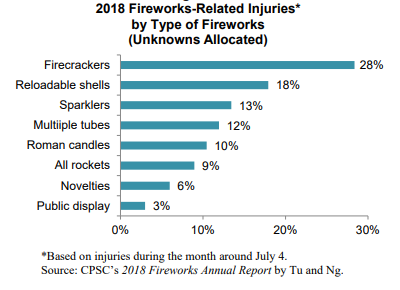
The Fourth of July is one of the most popular holidays in the United States and is ubiquitous with BBQ gatherings, parades, and of course, fireworks. As you prepare for this year’s Fourth of July celebrations, here are some safety tips for the Fourth of July to help keep you and your loved ones safe:
Most folks, most of the time, have not and will not experience these (admittedly) scary statistics. Fourth of July should be a fun time spent with family and friends in celebration of our nation’s birth, rather than feeling worried or stressed about possible accidents. However, knowledge is power, so keeping the following in mind can help you better plan your activities in a way that prevents mishaps.
An estimated 19,500 fires started by fireworks were reported to local fire departments in the US during 2018. These fires caused five civilian deaths, 46 civilian injuries, and $105 million in direct property damage.
(See NFPA Research for all statistics.)
(Check out these tips for getting your home Fourth-of-July ready)
And now that you’ve brushed up on staying safe, don’t forget to have a fun-filled Fourth of July weekend!
by First Team Real Estate | Aug 7, 2020 | Real Estate News, Selling | 0 comments
It’s hard to believe that the real estate market could be booming in the middle of a pandemic. But the fact is, coronavirus hasn’t killed the housing market, it’s helped reveal how viable and healthy it really is. With buyers and sellers continuing to safely and securely close home transactions amid COVID-19, the real estate market is a great bet right now.
Need to see the proof? Let’s review the facts and figures of buyer and seller activity that reveal the housing shortage and bidding wars contributing to a housing boom on pace to continue for several years.
In July, new home sales surged 55%, experiencing their biggest gain since 2005. In addition, mortgage applications to purchase a home rose 33%, and mortgage refinances jumped 111% compared to last year. Interest rates hit historic lows, dipping below 3% for the first time in 50 years, and encouraged a record number of buyers to purchase homes as Americans are recognizing the true value of a home. Coronavirus has reminded us all how precious our homes are, and for buyers, that means they’re willing to prioritize housing even as they cut back on other expenses.
Last month, the average home sale price spiked 6%, continuing over 8 years of gains, according to the National Association of Realtors (NAR). That’s why right now is the ideal time to sell for most homeowners who have equity because they can cash out for top dollar and then secure their next home for less with a low mortgage rate. Coronavirus has not negatively affected home prices like some expected, in fact, it’s helping them grow. It’s just simple supply and demand.
Today, the supply of homes for sale is tight. And with record numbers of house hunters entering the market, they are pushing up home prices. There are two main factors that contributed to our housing shortage, beginning back in 2008. First of all, home builders have been cautious since the Great Recession, building fewer homes every year since the market crash. Since 1959, on average, 1.5 million homes were built each year according to Census Bureau data. However, in the past decade, only 900,000 homes have been built each year!
Second, millions of homeowners understandably chose not to list their homes during quarantine which has shrunk inventory even lower. The real estate market was hit the hardest in March and April and has begun its rebound, but the market has a long way to go.
Millennials homebuyers who are officially ready to enter the market are putting pressure on the limited inventory as well. According to the latest NAR Profile of Buyers and Sellers, millennials by far make up the largest segment of homebuyers, 38% of all buyers. This only makes sense because the average millennial turns 32 this year, coinciding with the median age of a first time home buyer, which is 31. So as millennials continue to hit home-buying age amid our housing shortage, we will continue to experience a fiercely competitive real estate market.
Over the past three months, there has been an uptick in bidding wars on the real estate market. Following new regulations for safe home viewings, buyers are continuing their house-hunting despite the pandemic. For example, First Team agents Geoffrey and Lisa Thompson who listed their home for sale during the COVID-19 lockdown received an overwhelming buyer response with multiple offers.
Affordable homes for sale in Southern California nearly always sell quickly, and the high-end luxury market is now following suit, like this Yorba Linda vineyard that sold for $8.75 million in just 4 months with multiple offers. And this $7.25 million beachfront home in Laguna Beach that fell out of escrow in March, but ultimately sold in June with 3 competing offers.
The conditions of low supply and high demand won’t be solved overnight, which all but guarantees the housing boom we’re currently experiencing has years left to play out. So if you’re ready to sell your home and move onto the next stage in your life, this is the perfect time to do it.

De acuerdo a un estudio realizado por el sitio SocialCatfish.com que toca el tema de las estafas sobre el coronavirus por estado, los cinco estados principales son California (10,938 quejas, un aumento del 110% desde marzo), Florida (7,244 quejas, un aumento del 124%), Nueva York (6,677 quejas un 134%), Texas (6,427 quejas un 122%) y Pensilvania (4,245 quejas , hasta 201%).
A nivel nacional, la Comisión Federal de Comercio (FTC) ha registrado 144.727 informes de fraude que costaron a las víctimas $93 millones, una pérdida media de $263 por persona. Las compras en línea ocupan el primer lugar en la mayoría de las quejas a nivel nacional acumulando 22,124 informes.
1. La estafa de los precios inflados: Algunos minoristas están marcando artículos esenciales como papel higiénico y desinfectante para manos a niveles exorbitantes. Esto es particularmente atroz con un desempleo récord, ya que las personas simplemente no pueden pagar $30 por papel higiénico. La ley de aumento de precios varía según el estado, pero en promedio es ilegal marcar un producto hasta un 10% o más durante una emergencia declarada. Amazon ha tenido que eliminar medio millón de artículos para la venta en su sitio web debido al aumento de precios y ha suspendido 6,000 cuentas.
Cómo evitarlo: si sospecha que es víctima de un aumento de precios, repórtelo al Departamento de Justicia en www.justice.gov/coronavirus. Actualmente, el mercado está abastecido a precios normales para artículos esenciales y es una buena idea planificar con anticipación una segunda o tercera ola.
2. La estafa de productos no entregados: Hay miles de sitios web que ofrecen productos esenciales, como cubrebocas y guantes que simplemente toman su información financiera y de pago, pero nunca le envían el producto y además se quedan con su información para futuras estafas.
Cómo evitarlo: compre productos de grandes empresas en las que confíe. Si se trata de una empresa más pequeña, investigue buscando en Google para ver las reseñas y si se han presentado quejas.
3. Envíos con límite de tiempo: Debido a esta estafa, los vendedores están obligados por ley a darle una fecha de envío estimada o enviarle sus productos dentro de los 30 días. Hay una excepción para los clientes que abrieron una cuenta de tarjeta de crédito para comprar un producto, lo que les da a los vendedores un plazo de 50 días para enviar su producto. Si hay un retraso en la fecha de envío esperada, la compañía a la que le compró el producto debe notificárselo.
4. Estafa de comestibles gratis: Los estafadores envían mensajes de texto a sus víctimas diciéndoles que acaban de ganar comestibles gratuitos de Costco con un valor de $130. Todo lo que los clientes deben hacer es proporcionar a los estafadores su información personal, y supuestamente recibirán comestibles gratuitos de Costco en su puerta.
Cómo evitarlo: actualmente no hay una cadena nacional de comestibles que ofrezca alimentos gratis. No dé su información personal.
IT’S ALL ABOUT SUPPLY & DEMAND… Due to our current supply shortage bidding wars are back in our market. Homeowners who are selling now are able to secure top dollar for their property.
Robin Jones -July 1, 2020

Pacific Symphony, Irvine
Favorite past performances are broadcast every Sunday at 7 p.m. on KUSC 91.5 FM, including “Rhapsody in Blue” with pianist Aaron Diehl (July 12) and Beethoven’s Symphony No. 7 with pianist Vadym Kholodenko. The symphony’s 2017 performance at Segerstrom Hall of “Ellis Island” will show on PBS’s “Great Performances” on July 3 at 9 p.m. pacificsymphony.org
Muckenthaler Cultural Center, Fullerton
In addition to upcoming drive-in movie nights and concerts, the center is creating a sculpture garden on its 8.5-acre grounds to allow visitors to enjoy art with social distancing. The first piece to be installed was “Godot” by local artist Bret Price, a contemporary sculptor who works in steel. His work is in the collection at the Smithsonian American Art Museum. themuck.org
Bowers Museum, Santa Ana
“Reel Art: Movie Posters from Ghana,” one of the museum’s favorite exhibits from its permanent collection, is now showing online. Visitors to the website can see the poster art, view photos of the artists, and read about the history behind the posters while listening to a playlist created specifically for the exhibit. bowers.org
Chance Theater, Anaheim
In their regular series of “Chance Cyber Chats,” actors, directors, producers, and dramaturges who have worked with the theater lead panel discussions about Broadway shows streaming on Broadway HD. The show for July 10 is “The Lion,” and the chat on July 24 will focus on “If I Forget.” chancetheater.com
Laguna Playhouse, Laguna Beach
Playhouse regulars Erika and Brent Schindele team to sing favorite songs from popular musicals such as “Brigadoon” and “Merrily We Roll Along,” and musician Jason Feddy performs songs from Shakespeare plays, in “Play at Home” videos regularly posted to the playhouse’s YouTube channel. lagunaplayhouse.com/play-at-home-laguna
OCMA, Santa Ana
The museum posts new visual, audio, and video programming about art and artists under four categories—listen, learn, watch, relax—along with live programming with local artists every Thursday. Videos include interviews with artists Brice Bischoff and Sean Duffy, and audio offerings include a guided meditation with artist Kathryn Garcia and a playlist curated by painter and installation artist Dave Muller. ocmaexpand.org
Segerstrom Center for the Arts, Costa Mesa
“Center at Home” offers a slate of virtual acting, music, and dance classes, as well as performance highlights from shows. videos.scfta.org
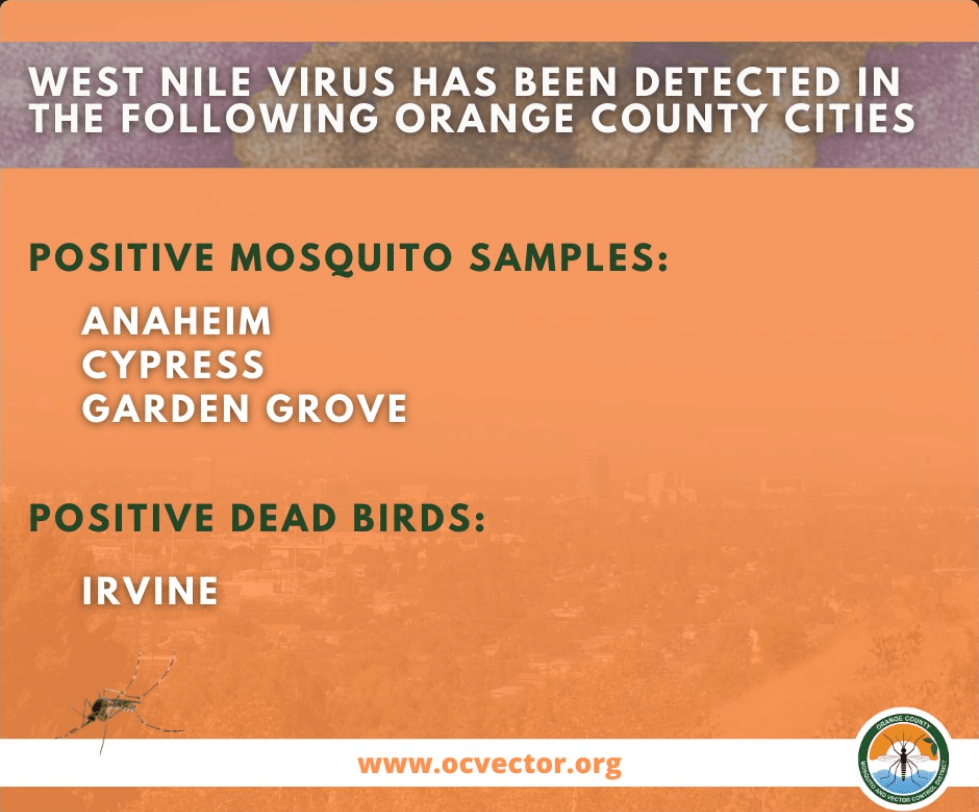
According to Orange County Mosquito and Vector Control District First West Nile Virus Positive Mosquitoes Confirmed in Orange County. As of 07/09/20 West Nile virus (WNV) positive mosquito samples have been detected in three Orange County cities: Anaheim, Cypress and Garden Grove. The District has also confirmed that one WNV positive dead bird was collected in City of Irvine. In the past few months samples were collected in other cities.
Eliminating mosquito breeding sources is critical to preventing the spread of West Nile virus. For more information on how you can help reduce the risk of WNV in your community, visit bit.ly/WNVinOC
To read the entire press release, visit: bit.ly/WNVPressRelease
Pending Home Sales increased by 44.3% in May, registering the highest month-over-month gain in the index since the National Association of Realtors (NAR) started tracking this metric in January 2001. So, what exactly are pending home sales, and why is this rebound so important?

According to NAR, the Pending Home Sales Index (PHS) is:
“A leading indicator of housing activity, measures housing contract activity, and is based on signed real estate contracts for existing single-family homes, condos, and co-ops. Because a home goes under contract a month or two before it is sold, the Pending Home Sales Index generally leads Existing-Home Sales by a month or two.”
In real estate, pending home sales is a key indicator in determining the strength of the housing market. As mentioned before, it measures how many existing homes went into contract in a specific month. When a buyer goes through the steps to purchase a home, the final one is the closing. On average, that happens about two months after the contract is signed, depending on how fast or slow the process takes in each state.
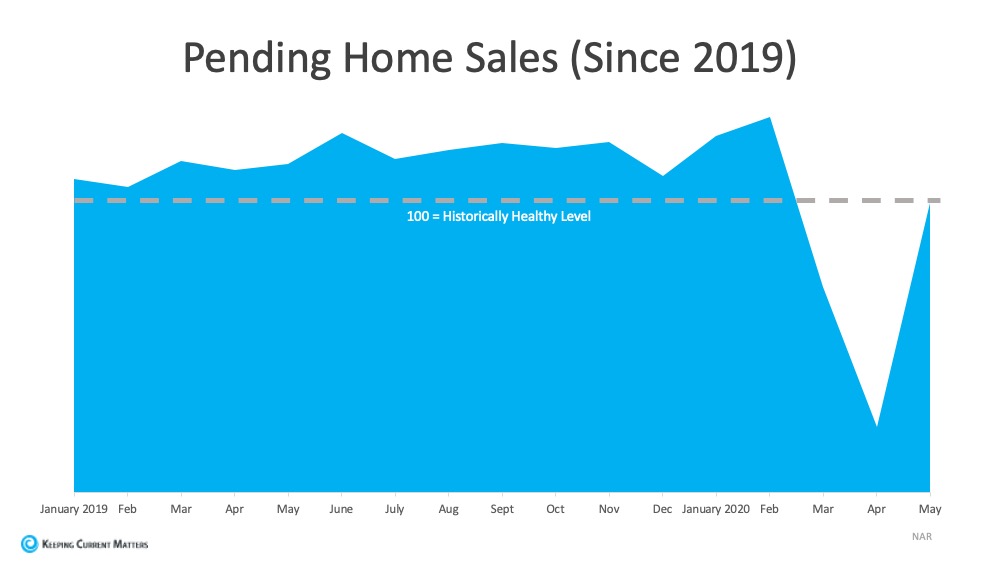
With the COVID-19 pandemic and a shutdown of the economy, we saw a steep two-month decline in the number of houses that went into contract. In May, however, that number increased dramatically (See graph below):This jump means buyers are back in the market and purchasing homes right now. Lawrence Yun, Chief Economist at NAR mentioned:
“This has been a spectacular recovery for contract signings and goes to show the resiliency of American consumers and their evergreen desire for homeownership…This bounce back also speaks to how the housing sector could lead the way for a broader economic recovery.”
But in order to continue with this trend, we need more houses for sale on the market. Yun continues to say:
“More listings are continuously appearing as the economy reopens, helping with inventory choices…Still, more home construction is needed to counter the persistent underproduction of homes over the past decade.”
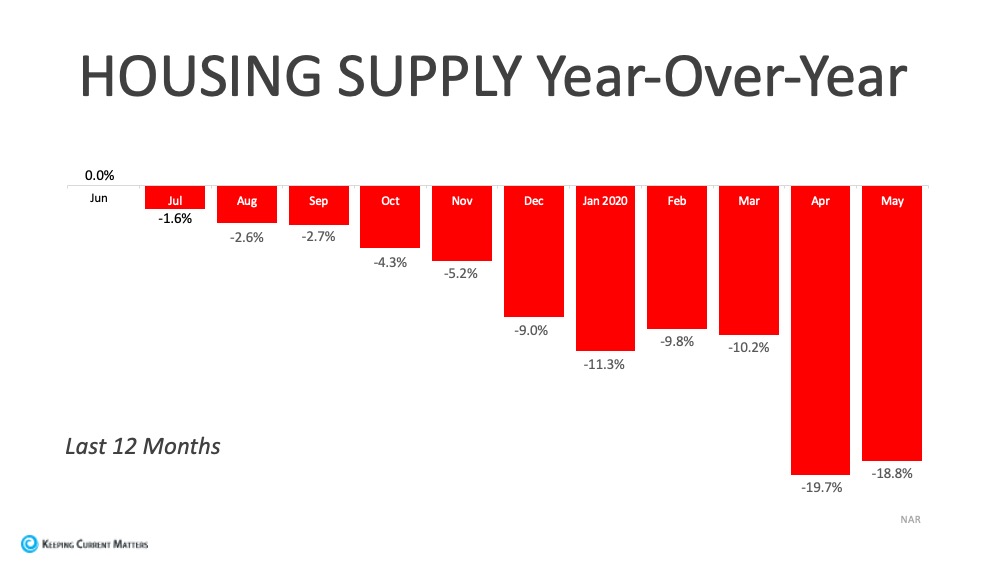
As we move through the year, we’ll see an increase in the number of houses being built. This will help combat a small portion of the inventory deficit. The lack of overall inventory, however, is still a challenge, and it is creating an opportunity for homeowners who are ready to sell. As the graph below shows, during the last 12 months, the supply of homes for sale has been decreasing year-over-year and is not keeping up with the demand from homebuyers.
If you decided not to sell this spring due to the health crisis, maybe it’s time to jump back into the market while buyers are actively looking for homes. Reach out to a local real estate professional to determine your best move forward.
by First Team Real Estate | Jun 30, 2020 | Buying | 0 comments
Wondering when the ideal time to sell your Southern California home is? The answer could be right now. We always want to help you make the smartest decisions when it comes to your real estate investments, and that’s why it’s important to know that right now is the absolutely ideal time to sell your home because of our current seller’s market. Inventory is low, prices are rising, and pent-up demand alongside low mortgage rates has the market flooded with homebuyers.
This April, inventory fell to its lowest level ever recorded for the month across the country according to the National Association of Realtors®. A seller’s market in real estate is defined by 3 months of inventory or less, and inventory across Southern California just reached 3 months. This limited supply keeps prices high as buyers compete to get a deal. Pending and sold transactions have just begun rising so the sooner you list this summer, the less competition there will be for you, equating to a very high probability of getting multiple, quality offers on your home.
Across the board, U.S. home prices have continued to rise despite coronavirus, gaining 5.5% in April according to NAR data. The major bottleneck in inventory, and a tremendous amount of buyer interest, is supporting this price growth. Speaking of which…

At the beginning of June, home-buying activity rose to about 88.9% of where it was before lockdowns disrupted the market according to data from realtor.com. This is thanks in part to historically low mortgage rates that have fallen as low as 3.13%. This was also pent-up demand from an unusually slow spring, rebounding along with the real estate market now that our country begins to open back up.
According to our Weekly Mortgage Watch, rates have hit historic lows and they’re projected to remain low amid Coronavirus. This creates a huge incentive for buyers who are ready to purchase and jumping into the market today. And as a homeowner, this influx of eager buyers (and multiple offers) creates an opportune time to sell as well. If you’re ready to sell your house, know that the motivation for buyers to purchase right now is as high as ever with rates where they are today.
Low mortgage rates also ensure you can sell your home and get an amazingly low rate on your dream home, making it more affordable now than ever.
Obviously everyone’s individual situation is unique, but for the majority of homeowners, this marks a particularly advantageous opportunity to cash out big when you sell your home and secure a low mortgage rate for yourself to buy your dream home. If you’re unsure, click here to check your home’s current value.

 ORANGE COUNTY TRENDS