Freddie Mac Multifamily recently announced a relief program affecting more than 27,000 multifamily apartment properties and the more than 4 million renters who reside at those properties. Multifamily properties are apartment buildings or other rental properties with five or more units.
How this program affects landlords
An apartment building owner with a Freddie Mac Multifamily loan may work with their lender to obtain up to 90 days of forbearance on their Freddie Mac Multifamily loans if their property operations have been adversely affected by the COVID-19 pandemic.
How this program affects renters
In exchange for loan forbearance, apartment building owners must agree to not evict tenants who are themselves adversely affected by COVID-19, whether due to illness, caring for a family member, job loss, reduced hours, or temporary unpaid leave, etc. This policy will last for the 90-day duration of the forbearance period.
How will I know if my landlord is participating in the program?
The best way for a renter to know if they are eligible for relief is to ask their landlord or management company if they are participating in the Freddie Mac Multifamily COVID-19 Relief Program.
How many renters will this program help?
Just over 20% of multifamily loan volume nationwide is financed by Freddie Mac Multifamily. Currently there are more than 4 million renters nationwide who live in properties that were financed with a Freddie Mac loan.
This program does not affect every renter in the United States. It only applies to renters who live in properties that are currently financed with a Freddie Mac loan and whose owners have opted in to the COVID-19 relief program.
Note: If your landlord is not participating in the Freddie Mac forbearance program, they may be participating in a similar program through their lender.
For those seeking a useful way to spend their time during social distancing—or anyone simply interested in forging a deeper connection with their homes—HB has launched Home Love, a series of daily tips and ideas to make every minute indoors more productive (and gratifying!).
Around the world, businesses are being forced to close their doors to help halt the spread of COVID-19. And yes, that includes the gym. While you might have to skip out on your favorite group fitness class (Pssst! There are a ton of studios live-streaming classes for free right now!), you should definitely keep moving—especially when you’re self-isolating instead of commuting to and from work as usual. But let us guess, you don’t have a home gym? Shayna Schmidt, co-founder of Livekick, a video service for home workouts, and personal trainer, is here to break down how to set up your very own at home.
What You Need
Not a ton, according to Schmidt! She says, “All you need is a 6 ft by 6 ft square of space. Seriously, that’s it.” That’s about the size of a small bathroom. So even if you live in a shoebox apartment (ahem, me), you shouldn’t have a problem finding space–even if it’s in the living room.
MORE FROM HOUSE BEAUTIFUL
Once you’ve found a spot to set up your home gym, you can start building your workouts. While Schmidt says that official gym equipment isn’t necessary, there are some “nice-to-have” items she recommends: If you can, get “a yoga mat and a set of dumbbells” (though, she says, “a set of wine bottles works just as well” as weights). Bonus: Reward yourself for working out by opening one of those bottles. Now that’s a workout I can get behind.
Schmidt also recommends taking advantage of items that you already own for your home gym setup. “A coffee table or ottoman works really well for tricep dips, Bulgarian split squats, and decline push-ups,” she says, and “A towel can easily replace a yoga strap.”
Got none of this stuff? No problem. “You can get some of the best workouts of your life with zero equipment,” says Schmidt, who recommends calisthenics, “a genre of fitness that utilizes gravity and your own bodyweight for resistance in order to increase strength and flexibility.” She says to think of it “like weightlifting, but instead of using external weights, you’re using what you’ve already got built in. The term calisthenics comes from the Greek words ‘Kalos,’ which means beauty, and ‘Stenos,’ which translates to strength. Strength and beauty–who doesn’t want that?!” Just search for “beginner calisthenics workout” on Youtube to get started.
What You Should Be Doing
With group fitness and gym trips out of the question, you might be wondering how to actually workout. If making up your own workout isn’t part of your social-distancing agenda, Schmidt recommends turning to fitness apps and live-streamed workouts.
Livekick
Like “a yoga retreat but without the need to leave your home,” says Schmidt, Livekick is a platform that offers “at-home yoga, fitness, meditation, and general wellness classes on live two-way streaming video, as well as private memberships.” Plus, you can do classes “with friends from all over the globe!” Fitness and remote friendships? Sounds like the perfect social distancing activity if you ask me.
While most people are familiar with ClassPass, a service that lets you try out a variety of boutique fitness classes, not as many are familiar with their app, ClassPass Go. While you’ll have to forego the in-person fitness sesh, “ClassPass Go connects you to audio-based fitness classes,” Schmidt says. Classes range from “stretching and meditation to strength training and outdoor running,” according to Schmidt. Each workout is curated by ClassPass trainers and range in duration from forty to sixty minutes.
From high-quality, raw proteins to artisan bread, keep your pantry stocked with goods from these local businesses.
➜ Selanne Steak Tavern Laguna Beach What: Pop-up mini market with items such as bacon, eggs, milk, produce, butchered-to-order prime meats, poultry, and seafood How: Curbside pick-up Order: 949-715-9881
➜ HendrixLaguna Niguel What: Pop-up market noon-6 p.m. Wednesday through Friday, offering items such as portion-cut steaks, pork, lamb, and fish; rotisserie chickens; fresh produce and pantry items; batch cocktails and half-price bottles of wine; even household supplies such as paper towels, gloves, and bathroom tissue. How: In-store or curbside pick-up Order: 949-248-1912➜ GlassparDana Point What: Fresh-caught, high-quality seafood including Alaskan halibut, salmon, tuna, shrimp, clams, scallops, and more How: In-store pick-up Order: 949-240-6243➜ Alta Baja MarketSanta Ana What: Dressings, spreads, salsas, house-made soups, pozole, and pecan butter How: Curbside pick-up Order: 714-783-2252
➜ Whitestone Dana Point What: Pantry items such as eggs, milk, bread, chicken breasts, and more How: In-store pick-up Order: 949-489-8911➜ Arc Butcher & BakerNewport Beach What: Select items such as eggs, milk, sliced meats, and dry goods How: Delivery in the Lido area Order: 949-877-0190➜ Haven Craft Kitchen + BarOrange What: Select items such as cage-free eggs, bread, sustainable seafood, and raw meats How: Curbside pick-up Order: Online at toastab.com
➜ Lido Bottle Works Newport Beach What: Chef Amy’s Quarantine Kit (items change daily), $45 How: Pick-up Order: 949-529-2784
➜ The Ecology Center San Juan Capistrano What: Farm Share: Resilience Box which comes with staple items from vegetables to fruit and add-on items such as honey, bread, and olive oil (currently sold out but stay tuned for updates) How: Curbside pick-up Order: Online at shop.theecologycenter.org
➜ Selanne Steak Tavern Laguna Beach What: Butchered-to-order meats, poultry, and seafood as well as milk, eggs, and produce How: Curbside pick-up Order: 949-715-9881
➜ Old Brea Chop House Brea What: Vacuum-sealed 12-ounce bone-in filets ($36) and 22-ounce bone-in ribeye ($57) How: Curbside pick-up and delivery Order: 714-592-3122
➜ The Winery Restaurant & Wine BarTustin What: Select cuts of meat (based on availability) How: Curbside pick-up and delivery (soon through Postmates and Grubhub) Order: 714-258-7600
➜ Portola Coffee RoastersOrange, Costa Mesa, Huntington Beach, and Tustin What: Straus milk (half gallon) and milk alternatives (based on availability) How: Free shipping Order: Online at portolacoffee.com
➜ OC Baking CompanyOrange What: Artisan bread How: Pick-up (bring cash and your own bags), Monday through Friday 8 a.m. to 2 p.m. and 5 p.m. to 8 p.m.
➜ NormsMultiple O.C. locations What: Care package including 2.5 dozen eggs, bacon, sausage, hash browns, sliced fruit, biscuits, and toilet paper ($35), as well as a salad add-on How: Pick-up
➜ Rye GoodsCosta Mesa What: Artisan bread; organic produce boxes available every Saturday How: Pick-up Order: Online at ryegoods.com by Sunday for pick-up on Tuesday; pre-order produce boxes
➜ Rialto CafeFullerton What: Eggs, bread, strawberries, tomatoes, and coffee, sourdough bread, tortillas, and more How: Pick-up Order: 714-525-5111
➜ Lazy Dog Brea, Irvine, and Orange What: Pantry home essentials package which includes items such as milk, eggs, butter, chicken, and toilet paper ($40) How: Curbside pick-up Order: Order online at lazydogrestaurants.com
➜ Golden Road Pub Huntington Beach What: Vegetables, bread, paper goods, meats and dairy/non-dairy products How: Curbside pick-up and drive-thru Order: Order online at sked.link/goldenroadpubhb
As health officials encourage social distancing to slow the spread of COVID-19 (coronavirus), millions of Americans have unexpectedly found themselves working from home. For many, telecommuting may be unfamiliar territory—a whole new world of video conferencing and working from the couch.
It can also lead to cabin fever, or feelings of anxiety or restlessness.
Whether you’ve been working remotely for years or this is your first time, we’ve got tips to make working from home work for you.
Working remotely shouldn’t mean changing your hours. Try to maintain the same working hours as usual, including starting and ending the workday at the same time and taking a lunch break.
Some people also find it helpful to get up and get ready for work as if they’re actually going into the office—shower, get dressed, have breakfast. This can help you feel ready for work and can start the day off on a productive note.
“We have such a structured scheduled at work, it can also be helpful to actually take the time to write out a schedule at home to make it more concrete for yourself,” says Jonathan Vickburg, mental health supervisor for Cedars-Sinai Share & Care.
Tip 2: Create a workspace
One of the best things you can do for yourself is to set up a designated space where you can work. Even if you don’t have a home office or a desk, it’s helpful to create a small space where you will be during work hours.
It’s beneficial to have a separate space to work so that at the end of the day, you can shut down and disconnect from work.
“It’s easier for the separation of work and free time to become blurred at home if you don’t make a clear distinction in your space,” says Jonathan. “Once you walk out of that space, you know your home time starts and you’re less likely to bounce back and forth between work and home, especially late at night.”
It’s also important there is enough light that you’re not straining your eyes looking at a computer and a proper place to set up your computer so you don’t have to crane your neck.
When you’re working from home, it’s easy to lose your work/life balance, but it’s important not to blend work time and home or family time.
When you’re done working for the day, put your work away. Log off and stay logged off until it’s time to return to work the next day.
“If your family is home too, communicate your boundaries with them so they know when it’s work time and when it’s not,” Jonathan says.
Tip 4: Keep in contact
One of the biggest concerns people have when working remotely is social isolation. Try using chat tools to stay in touch with your co-workers and make time to call friends and family each day. You can also try calling into meetings using your webcam so you can see people and they can see you.
“In maintaining balance, you need to carve out the pieces of your pie,” says Jonathan. “We are used to seeing people in our normal workday so at home we need to reinvent that, whether it’s social friendships or work colleagues. We have many different types of social interaction and it’s important to maintain those.”
Tip 5: Get moving
Physical exercise should be part of any lifestyle, but it’s especially important when you’re working from home. Try to incorporate 20 minutes of moderate activity each day.
There are many free resources available online that offer everything from yoga classes to full body workouts you can do from your living room.
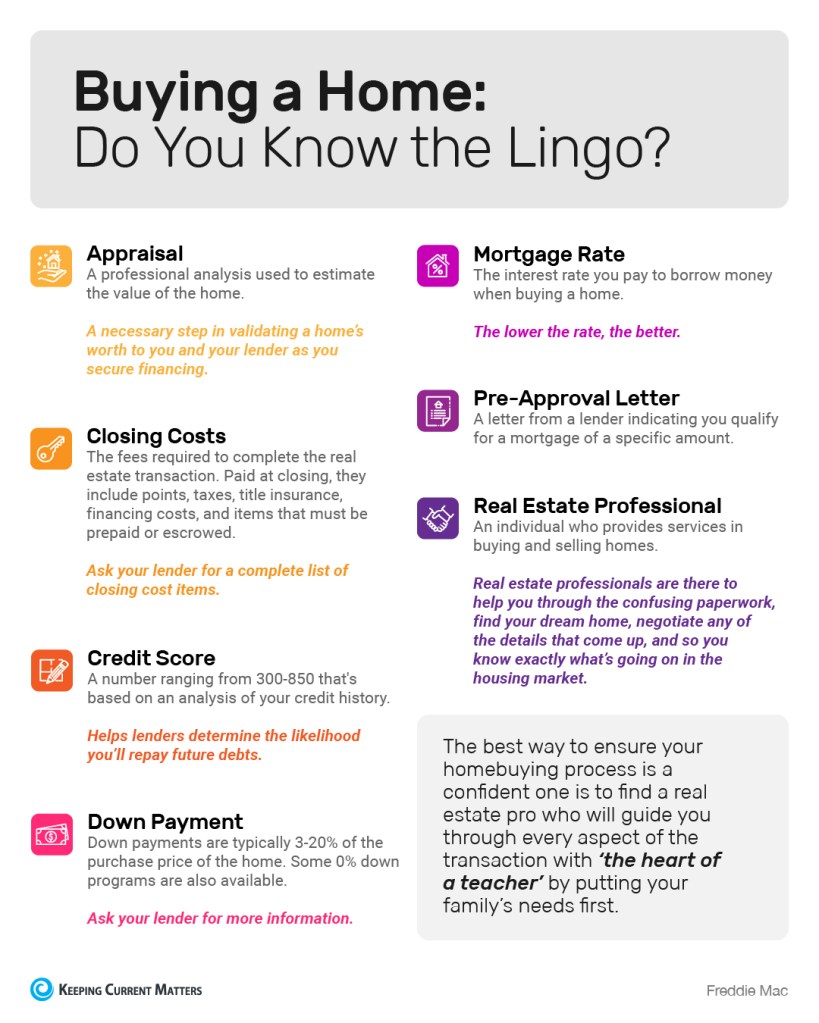
Buying a home can be intimidating if you’re not familiar with the terms used throughout the process.
To point you in the right direction, here’s a list of some of the most common language you’ll hear along the way.
The best way to ensure your homebuying process is a positive one is to find a real estate professional who will guide you through every aspect of the transaction with ‘the heart of a teacher.’

 CRAVETIGER
 Laguna Beach



 ORANGE COUNTY TRENDS