
Activities for the 4th of July

Never miss a thing in your community

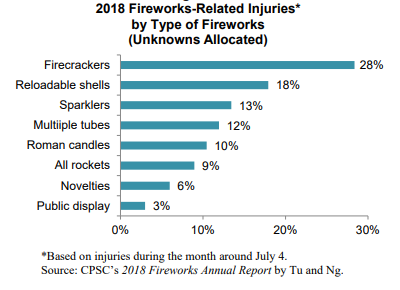
The Fourth of July is one of the most popular holidays in the United States and is ubiquitous with BBQ gatherings, parades, and of course, fireworks. As you prepare for this year’s Fourth of July celebrations, here are some safety tips for the Fourth of July to help keep you and your loved ones safe:
Most folks, most of the time, have not and will not experience these (admittedly) scary statistics. Fourth of July should be a fun time spent with family and friends in celebration of our nation’s birth, rather than feeling worried or stressed about possible accidents. However, knowledge is power, so keeping the following in mind can help you better plan your activities in a way that prevents mishaps.
An estimated 19,500 fires started by fireworks were reported to local fire departments in the US during 2018. These fires caused five civilian deaths, 46 civilian injuries, and $105 million in direct property damage.
(See NFPA Research for all statistics.)
(Check out these tips for getting your home Fourth-of-July ready)
And now that you’ve brushed up on staying safe, don’t forget to have a fun-filled Fourth of July weekend!

If you own real estate and decide to lease it out to someone else, then congratulations: you are now a landlord in the eyes of the law. Whether you lease out a single family home or apartments in a multiplex building, there are many landlord responsibilities that come with the territory.
Some duties seem clear, like collecting rent or finding tenants for a vacant unit. Others, however, may be less obvious. The more you learn, the more success you will have with your real estate investments. Let’s examine 10 landlord responsibilities you may have overlooked.
1. Knowing the Landlord-Tenant Laws for Your Jurisdiction
Ignorance of the law is no excuse. It’s your responsibility as a landlord to know and understand all tenant-landlord regulations for your city and state. Landlords can be (and often are) sued for not obeying their state’s laws, even if they weren’t aware they existed.
2. Preparing a Legal Lease Document
The lease agreement and any other legal paperwork is all part of a landlord’s duties. It’s your responsibility to ensure the rental contract is legally written and abides by all laws. Leasing periods, monthly rental rates and tenant names must be clearly indicated. In some jurisdictions, legal disclosures, such as security deposit details, must be included. The lease should also contain all appropriate clauses, such as advising tenants to purchase renters’ insurance. Many states have required language that must be included, such as the Megan’s Law clause in California lease agreements.
3. The Duty to Deliver Possession
Once a lease contract is signed, it is the landlord’s responsibility to deliver possession of the rental unit to the tenant on the agreed-upon date. The unit must be in move-in condition and any previous tenants must have vacated the premises.
4. Implied Warranty of Habitability
Another obligation is to make sure the rental unit is in a safe, habitable condition. The property must not have any serious deficiencies, and any supplied appliances, fixtures, plumbing and heating must be in good working order. The property must be free of insects and pests. Landlords are generally responsible for getting infestations under control, even if they occur after tenants have moved in, although in most states landlords can avoid this by specifying in the rental agreement that pest control is the renter’s responsibility.
5. Respect the Tenant’s Right to Quiet Enjoyment
According to most landlord-tenant acts, tenants have the right to quiet enjoyment – meaning to have the benefit of living in their home without being disturbed. Once a tenant has possession of a property, the landlord may not interfere with this right. It’s therefore the landlord’s responsibility to ensure he or she does not enter the rental unit without proper notice (usually 24 – 48 hours, except in emergencies). When a landlord enters the rental property, it must be at a reasonable time of day and for a valid reason.
6. Completing Repairs in a Reasonable Time Frame
Tenants have the responsibility of reporting any repairs that need to be done. Landlords’ responsibilities include responding to these reports and completing repairs in a timely manner. Urgent repairs should be done right away, while minor issues can be addressed more conveniently. But beware that unrepaired damage tends to cause more damage, and tends to encourage tenants to vacate the rental property.
7. Providing Safety Measures
It is your duty to protect your tenants, to a point. In some jurisdictions, landlords must provide specific safety measures. These may include fire and carbon monoxide detectors, fire extinguishers, front door peepholes, deadbolt locks on exterior doors and window locks.
8. Reporting Crime
If a landlord becomes aware of any criminal activity taking place in one of their rental units, they must report it to authorities. For example, some landlord-tenant acts have specific laws that can find a landlord liable if their property is used for dealing or creating drugs.
9. On-Site Property Management
In some states, the law requires on-site property management of multiplex buildings of a certain size. In California, for example, landlords must provide on-site management of all residential rental buildings of 16 units or larger.
10. Responsible for Property Manager’s Acts
An often-overlooked concern is that you can be liable for your property manager’s acts, including illegal ones. If a property manager does not follow local landlord-tenant laws and a rental application is refused based on their religion or race, for example, the landlord can also be held responsible. Stay up-to-date on your rental property’s operations and keep a watchful eye on anyone who works for you.
Being a landlord involves a steep learning curve when starting out, and the laws aren’t always simple. Taking the time to learn about your responsibilities as a landlord can mean the difference between earning a nice profit and losing money – or worse. Protect yourself by learning the laws that apply to you and surrounding yourself with a team of professionals.
Do you know of any landlord responsibilities that many new landlords overlook? Which obligation surprised you when you first became a landlord? Share your comments below!

Earlier this year, realtor.com announced the release of the Housing Recovery Index, a weekly guide showing how the pandemic has impacted the residential real estate market. The index leverages a weighted average of four key components of the housing industry by tracking each of the following:
The index compares the current status “to the January 2020 market trend, as a baseline for pre-COVID market growth. The overall index is set to 100 in this baseline period. The higher a market’s index value, the higher its recovery and vice versa.”
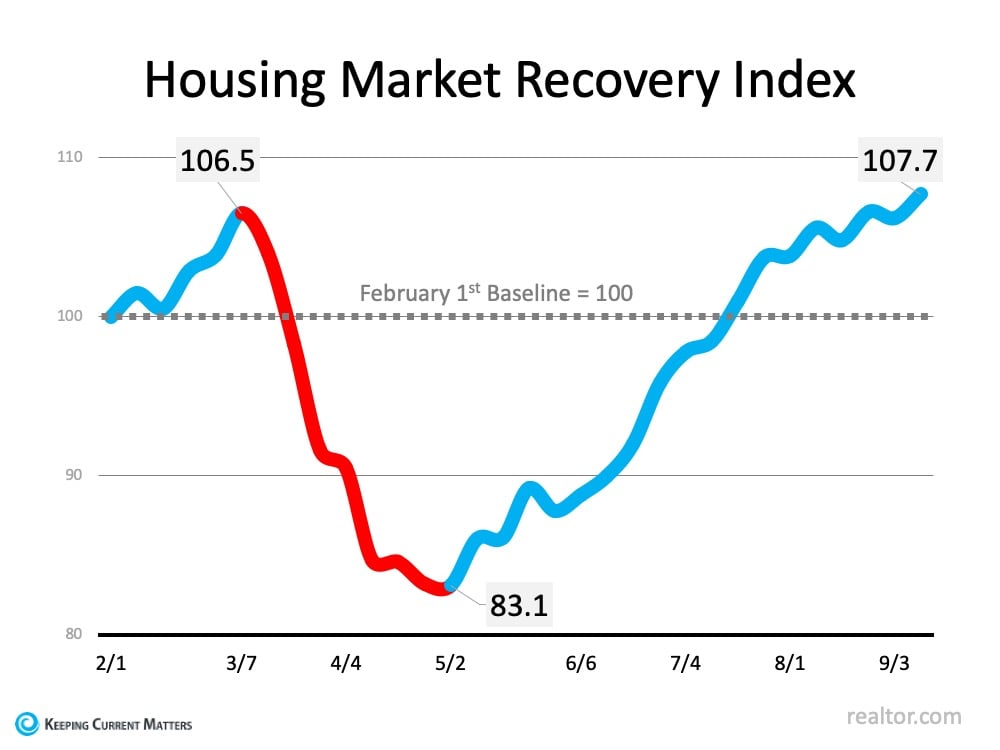
The graph below charts the index by showing how the real estate market started out strong in early 2020, and then dropped dramatically at the beginning of March when the pandemic paused the economy. It also shows the strength of the recovery since the beginning of May.Today, the index stands at its highest point all year, including the time prior to the economic shutdown.
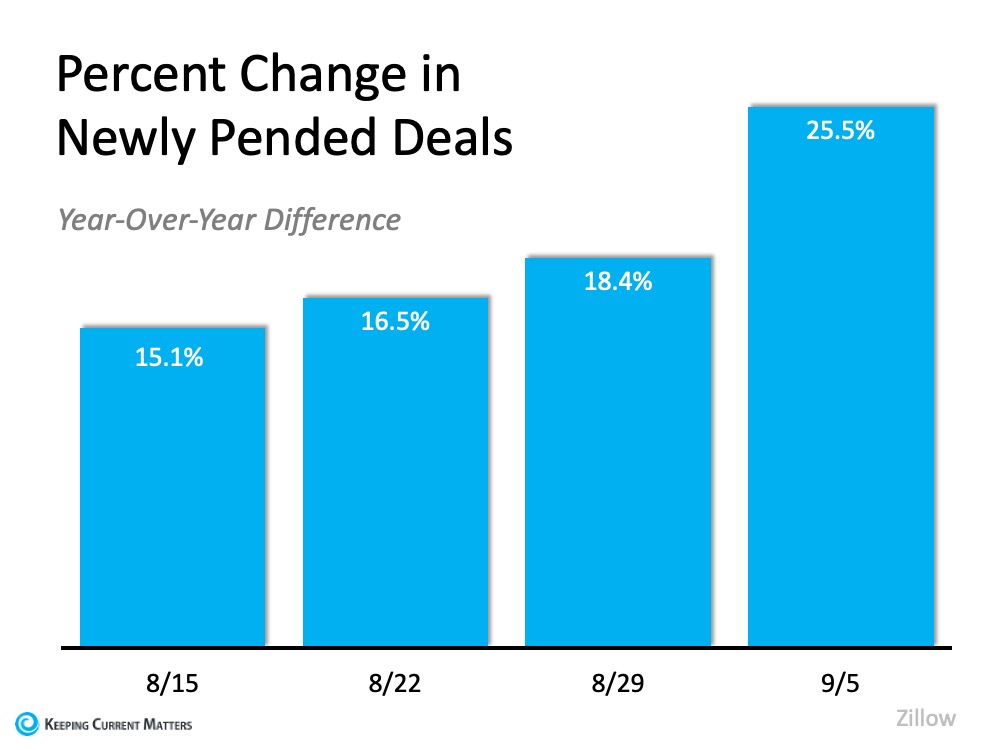
Though there is some evidence that the overall economic recovery may be slowing, the housing market is still gaining momentum. Zillow tracks the number of homes that are put into contract on a weekly basis. Their latest report confirms that buyer demand is continuing to dramatically outpace this same time last year, and the percent increase over last year is growing.Clearly, the housing market is not only outperforming the grim forecasts from earlier this year, but it is also eclipsing the actual success of last year.
Frank Martell, President and CEO of CoreLogic, explains it best:
“On an aggregated level, the housing economy remains rock solid despite the shock and awe of the pandemic.”
Whether you’re considering buying or selling, staying on top of the real estate market over the coming months will be essential to your success.
Limited Inventory, Demand continues gaining momentum, Interest rates at a History Low, Plus incentives such as down-payment assistance programs for buyer are offering great opportunities to those looking to buy and sell! . . .
If you are paying more than $2,500 in rent, you can afford a mortgage. Send me a message and let’s have a conversation on how to take advantage of the opportunities now available…
by Marlon Gamez REALTOR® | Lic# 02076704 (714) 650-0567 marlongamez@firstteam.com marlongamez.firstteam.com

There are so many ways in which 2020 is not turning out the way most Americans expected. In terms of real estate, we were hurtling toward a busy spring season. All the economic indicators looked strong, boosting buyers to battle it out for a limited supply of homes. But then the coronavirus pandemic swept across the nation, upending those expectations and forcing us to reassess the year ahead.
Home sales have fallen and real estate listings dissipated as the COVID-19 pandemic made many buyers and sellers think twice about buying, selling, and potentially even moving with a deadly and highly contagious virus on the loose. But home sales will rebound in the late summer and fall, driven by millennials eager to own a home of their own, according to a revised forecast for 2020 by realtor.com®’s economists.
Markets in smaller, more affordable cities and surrounding suburbs could be particularly brisk as folks reevaluate the appeal of big-city life during a pandemic. But realtor.com also predicts the housing market will experience a second round of pain in the form of another downturn toward the end of the year.
“COVID-19 has really dramatically changed the way the housing market is going to perform this year,” says realtor.com Chief Economist Danielle Hale. “We started off with the potential for the best year in more than a decade for sales. But we’re going to see ups and downs as the market grapples with an unsteady economy. This will affect buyers and sellers across the board.”
Sales of existing homes are expected to drop about 15% in 2020 compared with the previous year. Realtor.com is anticipating 4.5 million sales this year, compared with 5.34 million last year. The company’s economic team had originally forecast, late last year, that 5.25 million sales would take place in 2020.
While many cash-strapped buyers have eagerly anticipated prices falling, triggering a real estate bonanza similar to the Great Recession, that’s not likely to happen this time around. That’s because the number of homes on the market has fallen, by about 45% in April, and so has demand from buyers. There’s no glut of for-sale homes driving prices down.
“Sellers don’t like to reduce their prices. So they decide not to sell,” says Hale. Instead, they just pull their homes off the market.
The median price for an existing home is expected to hold steady, rising by just 1.1% in 2020 over the previous year.
“Were it not for COVID-19, we probably would’ve seen prices rise in the 2% to 4% range,” says Hale. That’s because even before the pandemic, available housing fell well short of demand, pushing prices up.
Buyers shouldn’t despair. Record-low mortgage interest rates will offset some of the slightly higher prices. Rates are expected to be around 3.2% this year, down from nearly 4% last year. And they could even fall into the 2% range later in 2020, amid further financial uncertainty.
The problem is, buyers may have a harder time snagging those low mortgage rates. Lenders are requiring higher credit scores and down payments, in some cases, as the nation grapples with unemployment rates that are likely in the 20%-plus range.
Another downside for buyers is that home construction is expected to slow, exacerbating the housing shortage. Housing starts, or the number of homes on which construction has begun, are expected to drop by 11% this year. Before the pandemic stalled construction sites in certain states, realtor.com had expected starts to jump by 10% in 2020.
Where buyers go shopping could also shift in the wake of the coronavirus. Those cooped up in small apartments in pricey cities may seek out smaller cities and suburbs where they can get more square footage and a backyard for less money. And with unemployment as bad as it’s been since the Great Depression, buyers may also seek out these areas for their lower prices.
“The experience of being at home for a long period of time has everyone rethinking their priorities,” says Hale. “People are recognizing space is more important, so they’re looking for more affordable areas where they can have more space at the same price.”
Yes, it’s possible to sell your home safely right now, 100% virtually. 1 in 4 home purchases was done sight unseen in April because buyers are still looking and are comfortable buying if you’ve got the right technology and smart marketing available. If you are ready to sell today, I can help. Message me if you have any questions on how to get started!

Every day that passes, people have a need to buy and sell homes. That doesn’t stop during the current pandemic. If you’ve had a major life change recently, whether with your job or your family situation, you may be in a position where you need to sell your home – and fast. While you probably feel like timing with the current pandemic isn’t on your side, making a move is still possible. Rest assured, with technology at your side and fewer sellers on the market in most areas, you can list your house and make it happen safely and effectively, especially when following the current COVID-19 guidelines set forth by the National Association of Realtors (NAR) and the Centers for Disease Control and Prevention (CDC).
You may have a new baby, a new employment situation, a parent who moved in with you, you just built a home that’s finally ready to move into, or some other major part of your life that has changed in recent weeks. Buyers have those needs too, so rest assured that someone is likely looking for a home just like yours.
According to the NAR Flash Survey: Economic Pulse taken April 5 – 6, real estate agents indicate, not surprisingly, that there’s a noticeable decline in current homebuyer interest. That said, 10% of agents said in the same survey that they saw no change or even an increase in buyer activity. So, while buyer interest is low compared to normal spring markets, there are still buyers in the market. Don’t forget, you only need one buyer – the right one for your home.
Here’s the other thing – people are spending a lot of time on the Internet right now, given the stay-at-home orders implemented across the country. Buyers are actively looking at homes for sale online. Some of them are reaching out to real estate professionals for virtual tours and getting ready to make offers too. Homes are being sold in many markets.
The same survey indicates that 56% of NAR members said sellers are removing their homes from the market right now. This can definitely work in your favor. If other sellers are removing their listings, your home has a better chance of rising to the top of a buyer’s search list and being seen. Keep in mind, listings will pick up again soon, as 57% of the respondents note that sellers are only planning to delay the process by a couple of months. If you need to sell right now, don’t wait for the competition to get back into the market again.
This year, delayed listings from the typically busy spring season will push into the summer months, so more competition will be coming to the market as the pandemic passes. Getting ahead of that wave now might be your biggest opportunity.
Real estate agents are working hard every single day under untraditional circumstances, utilizing technology to help both buyers and sellers who need to continue with their plans. We’re using virtual tours to show homes currently on the market, staying connected with the buyers and sellers through video chats, and leveraging resources to complete transactions electronically. We’re making sure the families we support remain safe and can keep their real estate needs on track, especially as life is changing so rapidly.
Homes are still being bought and sold in the midst of this pandemic. If you need to sell your house and would like to know the current status in your local market, contact a local real estate professional to create a safe and effective plan that works for you and your family.
During times of distress, homeowners should be aware of a common fraud known as “foreclosure rescue fraud.”

In this scheme, someone may offer false promises of being able to save your home from foreclosure or guarantee a loan modification with a reduced mortgage payment. Common elements of this fraud include the fraudster:
Loan modification scams may operate similarly as fraudsters collect an upfront fee and promise to work with your loan servicer to obtain a modification with a reduced payment on your behalf.
If you have been contacted by someone other than your loan servicer (the company listed on your mortgage statement) who is offering to provide mortgage assistance, do not provide your information.
To help avoid fraud:
If you have been contacted by someone claiming to represent Freddie Mac, report it here. Freddie Mac will never reach out to offer a refinancing opportunity or new loan over the phone.
If Freddie Mac owns your mortgage and you are a homeowner that has been affected directly or indirectly by COVID-19, mortgage relief options are available.

All of a sudden, Houseparty is everywhere. The video-chatting app, which makes it easy for as many as eight people to share a virtual hang, has been around since 2016, but for obvious reasons, it has surged in popularity this month: Today, Houseparty is the iOS Store’s fifth most downloaded free app in the United States. (It has already hit #1 in the United Kingdom, Italy and Spain.) If you don’t have it already, chances are good that someone you know will invite you to join it soon.
So what’s the appeal of Houseparty, and what are the potential downsides? As its name suggests, the app is basically a virtual version of a massive get-together. If your friends are “in the house,” you can chat them up one on one—or you can gather a group in a room to talk or play games, either locking that room’s door or leaving it open for new people to walk in and join you. Here is what you need to know.
The benefit: Houseparty draws on your personal contact lists (from your phone as well as from Facebook and Snapchat) to help you create a network of friends on the app. The app then tells you who is using it and who has used it recently. If one of your friends is on at the same time as you, hit the “join” button next to their name to be connected to them right away.
The drawback: Because friends can start conversations without any notice, make sure you’re ready to be seen when you’re using the app: You could be zapped into a conversation at any time. If you have a lot of contacts, you may want to be selective about which ones you put on your friend list; you could limit it, for example, to people you really wouldn’t mind seeing anytime. (Also, allowing any app to access your contacts raises privacy concerns—but Forbes’s cybersecurity reporter finds no major red flags, and offers some tips on how to minimize your risk.)
The benefit: Houseparty allows groups of up to eight people to chat at once. But compared with other apps like Zoom, it has a casual, spur-of-the-moment vibe. You don’t need to plan anything in advance or send anyone an invitation; you can instantly join any open group that contains at least one person you’re friends with. That makes it a good way to expand your social circle, like going to a real-life party with one friend you know.
The drawback: You may not want people you don’t know butting into your chat time with friends. To control that, you can use the lock button at the bottom of the screen to close the group off. And if your kids are using the app—or if you’re a kid yourself—be mindful of the stranger danger that can come with meeting a bunch of new folks online.
The benefit: If a friend you want to talk to isn’t using the app at the moment, you can hit the hand-wave icon next to their name to let them know you’re around; they’ll get a notification on their phone and have the option to join you or not. The app also sends you notifications by itself to let you know when contacts of yours have joined the app or when friends of yours are using it.
The drawback: If you have a lot of friends and/or contacts, you’ll be getting a lot of notifications about them. To manage this, hit the smiley-face icon on the upper left of the main screen. That will give you the option to turn off notifications completely or to mute them for individual friends. And if you’re not necessarily in the mood to chat but just want to see who’s around, you can use the app without anyone knowing by pressing the app’s icon on your phone a little longer than usual and hitting the “Sneak Into the House” option.
The benefit: One of the Houseparty features that users enjoy most is the availability of simple games to play during chat sessions. When you click on the dice on the upper right if your screen, you there are four options: a trivia challenge and games that are essentially versions of Pictionary, Heads Up! and Apples to Apples. (The Pictionary one is the most fun.) If you’re looking to pass a little time with your buddies, these can be a major plus.
The drawback: The games themselves are not as well developed as they could be; after a few rounds, you’ll be getting an annoyingly large number of repeat questions and clues. Given the app’s new popularity, we hope that its developers will expand on this aspect of the experience soon, since it is one of the app’s major draws. (In the Heads Up! game, at least, you can add fresh categories for 99 cents a pop.)
The benefit: If someone you want to chat with doesn’t happen to be around, Houseparty makes it simple to record and send them a brief video message—and get a notification when they read it. Also, the app makes it easy to record your chat sessions by hitting the ellipsis on the bottom left of the screen.
The drawback: Houseparty doesn’t tell you if someone else is recording your conversation, so be careful if you’re chatting with someone you don’t trust—which is good advice under any circumstances, really.
To take full advantage of Houseparty, you’ll need to use a phone or tablet. A desktop version exists, but it lacks most of the features that make the app worthwhile.
Party on!
 ORANGE COUNTY TRENDS