
Activities for the 4th of July

Never miss a thing in your community
The Fourth of July is one of the most popular holidays in the United States and is ubiquitous with BBQ gatherings, parades, and of course, fireworks. As you prepare for this year’s Fourth of July celebrations, here are some safety tips for the Fourth of July to help keep you and your loved ones safe:
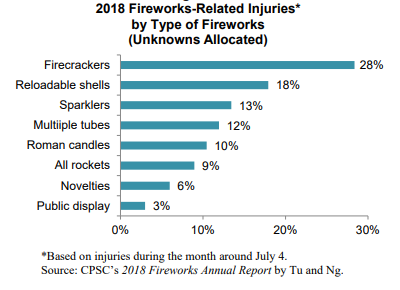
Most folks, most of the time, have not and will not experience these (admittedly) scary statistics. Fourth of July should be a fun time spent with family and friends in celebration of our nation’s birth, rather than feeling worried or stressed about possible accidents. However, knowledge is power, so keeping the following in mind can help you better plan your activities in a way that prevents mishaps.
An estimated 19,500 fires started by fireworks were reported to local fire departments in the US during 2018. These fires caused five civilian deaths, 46 civilian injuries, and $105 million in direct property damage.
(See NFPA Research for all statistics.)
(Check out these tips for getting your home Fourth-of-July ready)
And now that you’ve brushed up on staying safe, don’t forget to have a fun-filled Fourth of July weekend!
August 24, 2020By: Scholastica (Gay) Cororaton
Several indicators point to the quick recovery of the housing market from the pandemic slump during April and May, with home sales on an annualized rate in July now above the February level. Indicators gathered from a survey of REALTORS® that are reported in the August REALTORS® Confidence Index Survey also show that homebuying demand is strong, which means that the rebound in sales as a result from the end of shelter in place measures is likely to be sustained in the coming months.
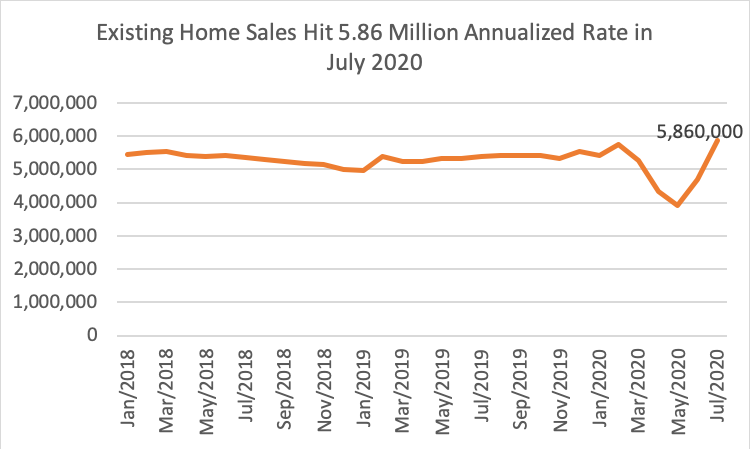
Existing-home sales rose a record 24.7% in July to an annualized rate of 5.86 million, which is higher than the pre-pandemic February level (5.76 million). On a year-to-date basis, existing-home sales (2.917 million) are just 5% below last year’s seven-month period level (3.062 million). The median existing-home sales price rose 8.5%, to $304,100, as demand strongly absorbed the supply coming into the market. As of the end of July, the level of inventory of homes for sale on the market was only equivalent to 3.1 months at 1.5 million homes, down 21.1% from one year ago.
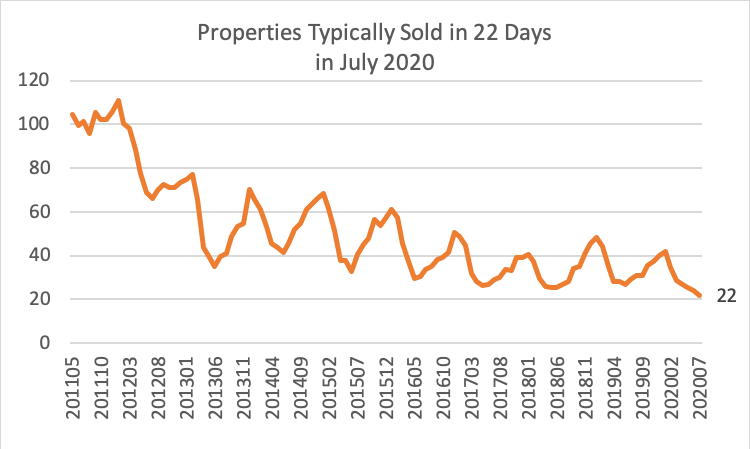
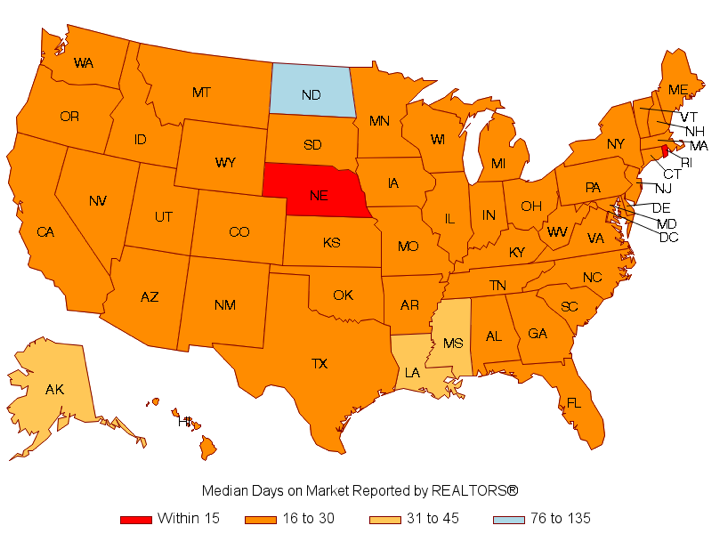
Properties were typically on the market for 22 days, a record low since NAR collected this survey-based information in 2011, according to the August REALTORS® Confidence Index Survey, a monthly survey of REALTORS® on their transactions during the month. One year ago, properties typically sold in 29 days. This is also faster than the median of 36 days in February prior to the coronavirus outbreak. Sixty-three percent of properties sold within one a month, compared to 51% one year ago and 47% in February.
In almost all states, except for North Dakota, Alaska, Louisiana, and Mississippi, properties typically sold within one month. In Nebraska and Rhode Island, REALTORS® reported that properties typically sold in 15 days. Properties also sold quickly in states such as Idaho (17 days), Utah (18 days), Indiana (18 days), Tennessee (19 days), Washington (19 days), Massachusetts (19 days), Arizona (20 days), Colorado (20 days).
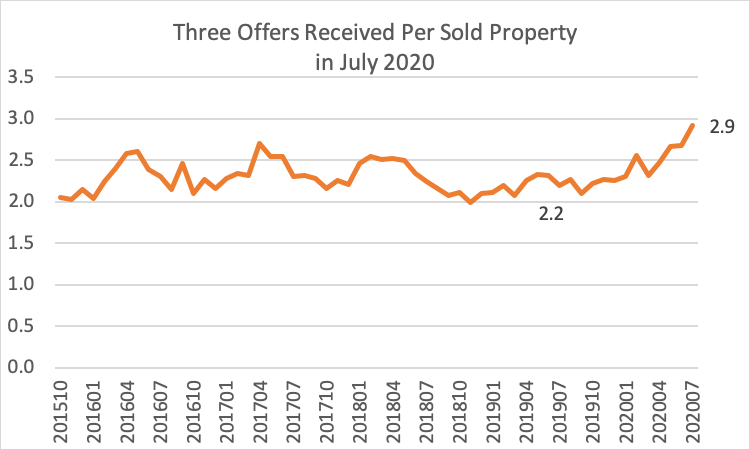
Not only are properties selling quickly, but they are also getting more offers. On average, REALTORS® reported nearly three offers per sold property in July 2020, up from about two offers one year ago.
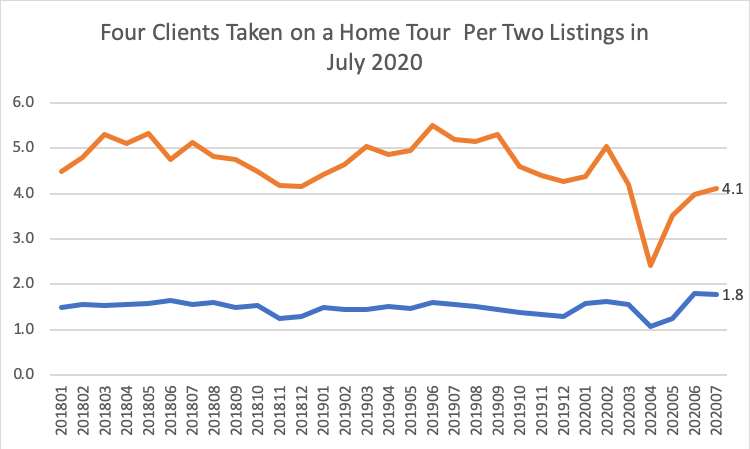
Demand has outpaced supply. On average, REALTORS® reported taking out four clients on a home tour, up from an average of two clients in February. Meanwhile, on average, REALTORS® reported listing only nearly two properties in July, although this is up from about one listing in April.
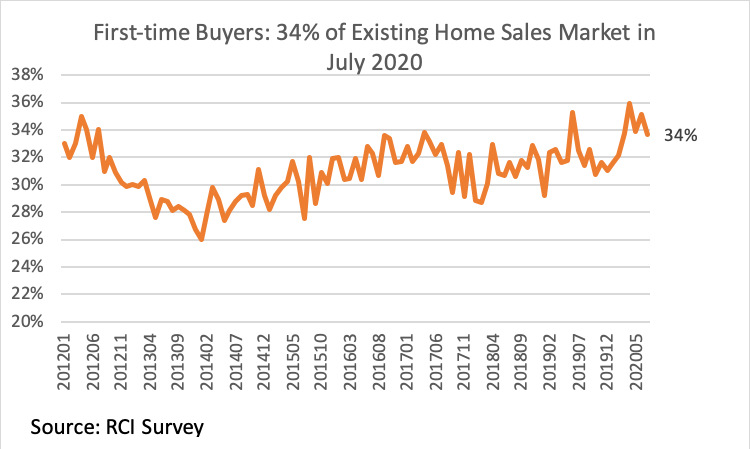
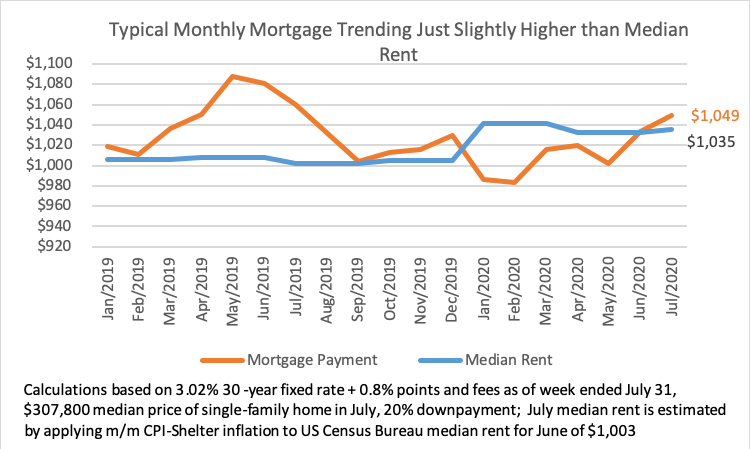
Who’s buying? In part, first-time homebuyers, which made up 34% of homebuyers in July 2020, up from 32% one year ago. Mortgage rates are at ultra-low levels, with the 30-year fixed rate averaging 3.02% in July 2020. The strong price appreciation has increased the monthly mortgage payment to $1,049 on a home purchased at the median sales price of $307,800 and financed with a 20% down payment loans, but this is just a little higher than the median rent of $1, 035. Concerns about safety and social distancing may also be increasing the demand for homes.
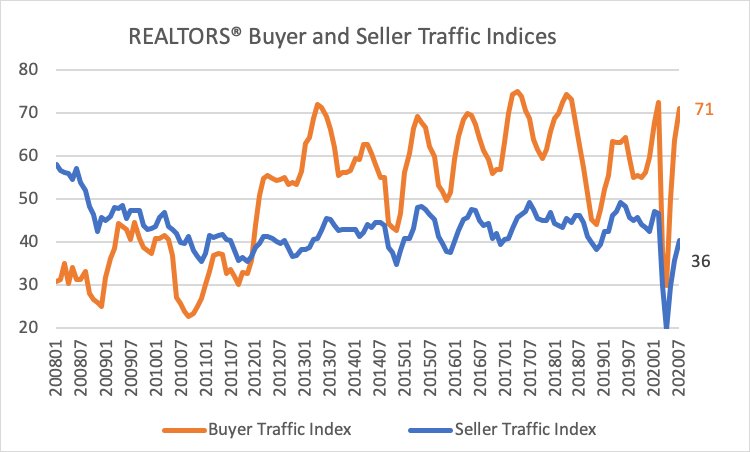
Compared to one year ago, about 4,000 REALTORS® reported that buyer traffic was broadly “strong.” The REALTORS® Buyer Traffic Index hit 71 in July, about the same level in February (72), after the index fell to below 50 in March and April.1 The housing market recovery has been relatively swift compared to the pace of recovery during the Great Recession when the Buyer Traffic Index stayed at below 50 from 2008 through 2011. Meanwhile, supply is broadly “weaker” compared to one year ago, with the REALTORS® Seller Traffic Index trending below 50.
Respondents from all states reported that market conditions were broadly stable or strong, except in North Dakota which continues to be impacted by the drop in crude oil prices.
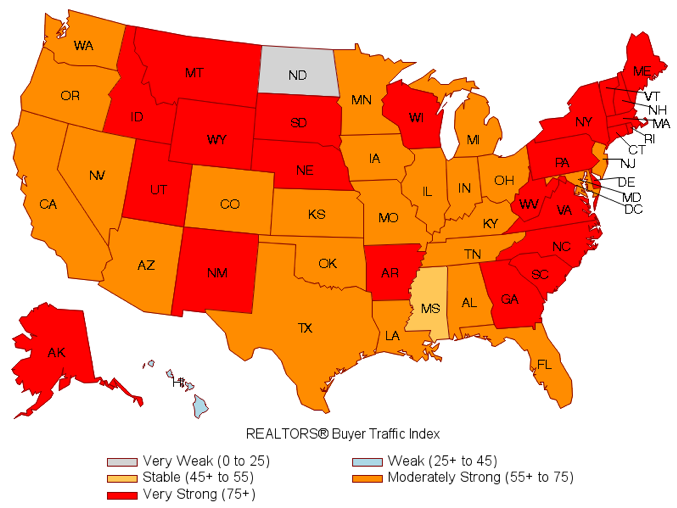
1 The index measures homebuying activity in the reference month (July) compared to one year ago. An index above 50 more respondents reported that home searching activity rose compared to one year ago than the number of respondents who reported a decline.
by First Team Real Estate | Aug 7, 2020 | Real Estate News, Selling | 0 comments
It’s hard to believe that the real estate market could be booming in the middle of a pandemic. But the fact is, coronavirus hasn’t killed the housing market, it’s helped reveal how viable and healthy it really is. With buyers and sellers continuing to safely and securely close home transactions amid COVID-19, the real estate market is a great bet right now.
Need to see the proof? Let’s review the facts and figures of buyer and seller activity that reveal the housing shortage and bidding wars contributing to a housing boom on pace to continue for several years.
In July, new home sales surged 55%, experiencing their biggest gain since 2005. In addition, mortgage applications to purchase a home rose 33%, and mortgage refinances jumped 111% compared to last year. Interest rates hit historic lows, dipping below 3% for the first time in 50 years, and encouraged a record number of buyers to purchase homes as Americans are recognizing the true value of a home. Coronavirus has reminded us all how precious our homes are, and for buyers, that means they’re willing to prioritize housing even as they cut back on other expenses.
Last month, the average home sale price spiked 6%, continuing over 8 years of gains, according to the National Association of Realtors (NAR). That’s why right now is the ideal time to sell for most homeowners who have equity because they can cash out for top dollar and then secure their next home for less with a low mortgage rate. Coronavirus has not negatively affected home prices like some expected, in fact, it’s helping them grow. It’s just simple supply and demand.
Today, the supply of homes for sale is tight. And with record numbers of house hunters entering the market, they are pushing up home prices. There are two main factors that contributed to our housing shortage, beginning back in 2008. First of all, home builders have been cautious since the Great Recession, building fewer homes every year since the market crash. Since 1959, on average, 1.5 million homes were built each year according to Census Bureau data. However, in the past decade, only 900,000 homes have been built each year!
Second, millions of homeowners understandably chose not to list their homes during quarantine which has shrunk inventory even lower. The real estate market was hit the hardest in March and April and has begun its rebound, but the market has a long way to go.
Millennials homebuyers who are officially ready to enter the market are putting pressure on the limited inventory as well. According to the latest NAR Profile of Buyers and Sellers, millennials by far make up the largest segment of homebuyers, 38% of all buyers. This only makes sense because the average millennial turns 32 this year, coinciding with the median age of a first time home buyer, which is 31. So as millennials continue to hit home-buying age amid our housing shortage, we will continue to experience a fiercely competitive real estate market.
Over the past three months, there has been an uptick in bidding wars on the real estate market. Following new regulations for safe home viewings, buyers are continuing their house-hunting despite the pandemic. For example, First Team agents Geoffrey and Lisa Thompson who listed their home for sale during the COVID-19 lockdown received an overwhelming buyer response with multiple offers.
Affordable homes for sale in Southern California nearly always sell quickly, and the high-end luxury market is now following suit, like this Yorba Linda vineyard that sold for $8.75 million in just 4 months with multiple offers. And this $7.25 million beachfront home in Laguna Beach that fell out of escrow in March, but ultimately sold in June with 3 competing offers.
The conditions of low supply and high demand won’t be solved overnight, which all but guarantees the housing boom we’re currently experiencing has years left to play out. So if you’re ready to sell your home and move onto the next stage in your life, this is the perfect time to do it.
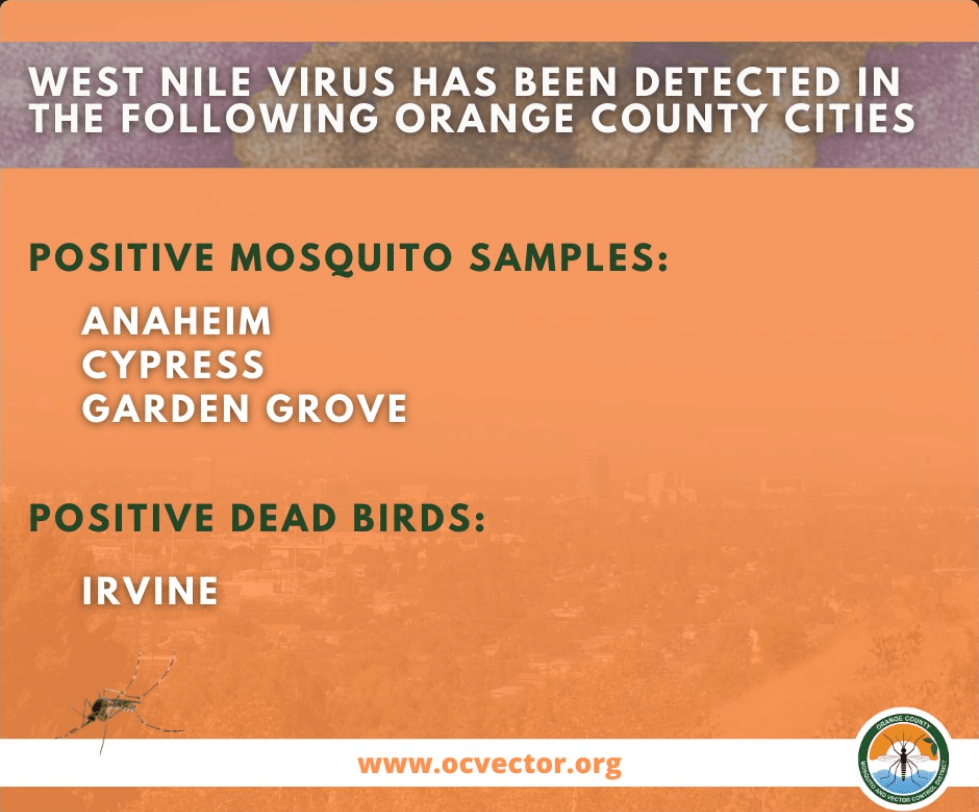
According to Orange County Mosquito and Vector Control District First West Nile Virus Positive Mosquitoes Confirmed in Orange County. As of 07/09/20 West Nile virus (WNV) positive mosquito samples have been detected in three Orange County cities: Anaheim, Cypress and Garden Grove. The District has also confirmed that one WNV positive dead bird was collected in City of Irvine. In the past few months samples were collected in other cities.
Eliminating mosquito breeding sources is critical to preventing the spread of West Nile virus. For more information on how you can help reduce the risk of WNV in your community, visit bit.ly/WNVinOC
To read the entire press release, visit: bit.ly/WNVPressRelease

Unsplash/Jennifer Chen.
How to help your pet through this fun but noisy holidaySUNSET – July 2, 2020
Unless you’ve been living under a rock (or in a doomsday shelter) you might have noticed that both illegal and “safe and sane” fireworks have been at an all-time high this month. And if you have a pet, you know that the loud booms have been especially unsettling for our furry friends.
To dogs, consistent loud noises and bright, flashing lights can cause a lot of distress, making the 4th of July (and the weeks before and after) one of the biggest times of the year for pet stress.
First, it’s important to recognize the many ways dogs can show signs of stress and anxiety. These signs can include: heavy panting, drooling, pacing, hiding, or trying to escape, trembling, potty accidents, wide eyes, and whining or barking. Pay attention to your dog and learn to recognize these signs or any other abnormal behavior.More Videos From SunsetHow to Pack an Emergency KitBe ready for any disaster with a pre-packed emergency kit.Volume 0%00:0501:11
Luckily, there are plenty of ways to help your dog overcome their fireworks-related anxiety. Here are some of the best tips I’ve tried with my easily spooked pup that seem to help.
This is a no-brainer, but you’d be surprised how many people take their pets with them to enjoy a fireworks show. Not only is it scary for dogs to be out in the open or in a car with loud noises all around them, but it can also cause them to react in fear and run away. Keep in mind that fireworks may be enjoyable for humans, but they can be traumatizing for pets. If there is no other option, be sure to keep your dog’s tag and collar on at all times, and make sure your dog is chipped. This will make it infinitely easier to track down your pup should the unthinkable happen.
Tiring your dog out is a great way to ensure they sleep through the fireworks finale, which will give you all the freedom in the world to enjoy the show without worrying about your pet. An extra-long hike or ball-chasing session should do the trick, but make sure your dog is physically fit for the extra workout or it could lead to other long-term health issues.
It’s important to do your research and consult your vet before giving your dog any calming treats or CBD tinctures. We’ve tried and loved NaturVet Quiet Moments Calming Aid Dog Soft Chews, which are chock-full of natural and active ingredients (vitamin B1, L-tryptophan, and melatonin) that promote calm and restfulness. We give our 70-pound dog four chews about 30 minutes before any high-stress event, coupled with reassuring petting and his security blanket, and it really makes a difference. While it’s tempting to give an anxious pet treats daily, check with your vet as even OTC treatments can cause digestive issues.
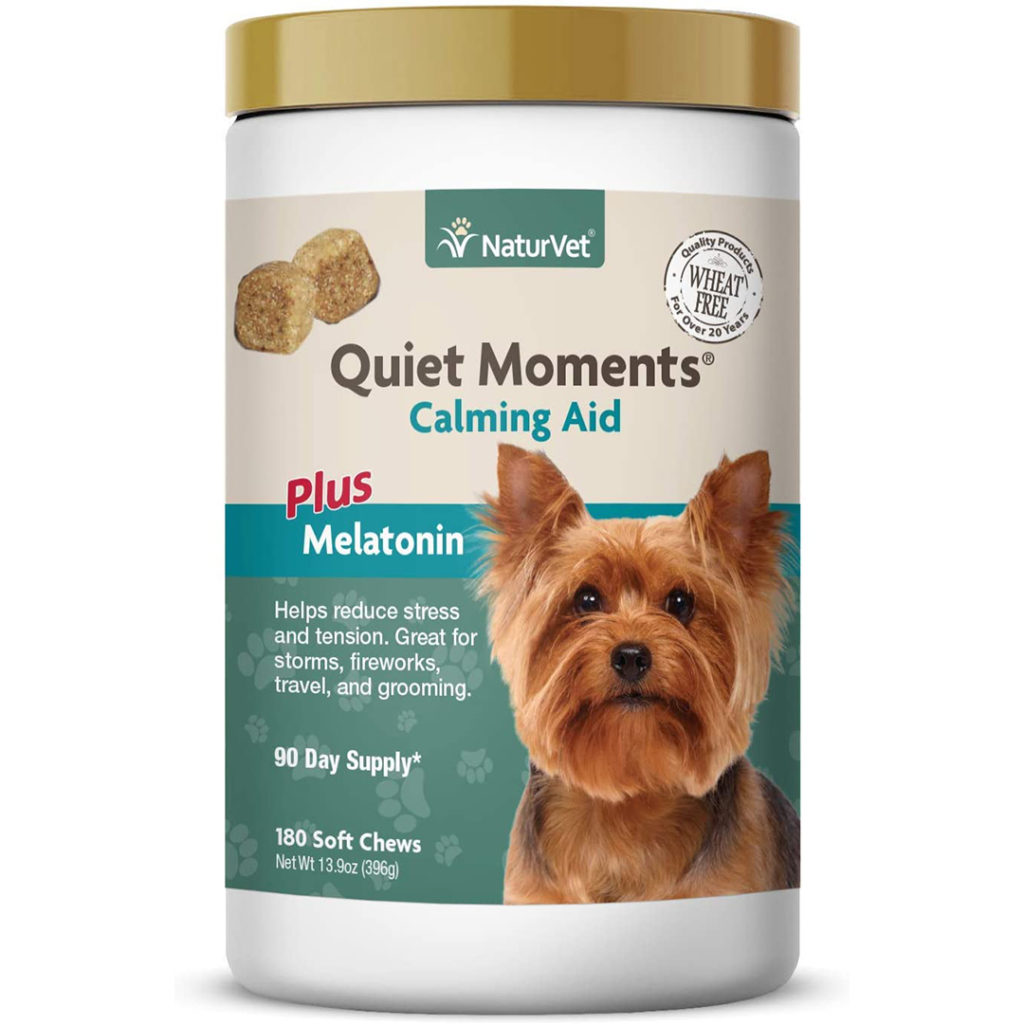
NaturVet Quiet Moments Calming Aid for Dogs, from $12 Buy Now
While many dog owners have reported success using CBD oil to treat anxiety, there is currently no scientific data on how using CBD oil affects dogs. Because CBD products are not yet regulated, meaning consistency and purity are not always validated, check with your vet for the proper dosage for your pet’s breed and size.
If it’s bedtime and both you and your pup are having trouble dozing off, try a white noise machine, fan, or even the TV. The soothing and familiar sounds can help drown out some of the noise outside and re-runs might help you fall asleep more easily than an exciting new show. However, if the booms from the fireworks are too loud to drown with a fan or TV, turn up the music.

SNOOZ White Noise Sound Machine, from $79.99 Buy Now
A 2002 study found that music with a tempo of 50-60 beats per minute can greatly relax dogs, which means it’s time to make some classical, reggae, and soft rock mixes on Spotify for your pup. You can also purchase a device specifically geared towards dogs like the RelaxoPet Subliminal Sound Calming Aid.

RelaxoPet PRO Relaxation Trainer, $89.90 Buy Now
Chances are your dog runs and hides, tail in between legs when he hears a loud noise. By giving your dog the choice to leave a situation, you increase their confidence in dealing with uncertain or stressful moments. When choosing a “safe space” for your dog, look for a spot that is quiet, easily accessible, close enough that you can check on them, temperature-controlled, and big enough for your dog to stretch out as he/she needs. Be sure to provide water and any other comforting objects your dog enjoys, such as a security blanket (we like the ones from PetFusion) or safe chew toys. If your dog is feeling extra jumpy, check out the Thundershirt Anxiety Jacket, which is designed to apply gentle, constant pressure to calm anxiety, fear, and over-excitement.

Thundershirt Classic Dog Anxiety Jacket, from $39.95 Buy Now

PetFusion Premium Pet Blanket, $17.99 Buy Now
to see original article click here

Our country faces challenges all the time. Whether it’s a recession, natural disaster or, yes, even a global pandemic—no matter what’s happening in the world, life still happens. Today, many families find themselves needing to move at a less than ideal time.
Moving is always stressful, but moving while trying to navigate certain restrictions and safety regulations can quickly become an overwhelming undertaking. While many may attempt to reschedule their moves to less turbulent times, some families can’t delay the process. Maybe you sold your home before the pandemic hit and now are left to figure out the best move.
If you find yourself needing to move during these challenging times, here are some tips to make the process as smooth as possible:
Get Rid of What You Don’t Need
Decluttering and downsizing is something you should implement during any move, no matter the state of the world. Many of us have recently been spending more time at home due to stay-at-home order; use the downtime as an opportunity to go through your belongings and get rid of what you don’t use, need or want anymore. Don’t waste time and money by moving items to your new location that are just going to get tossed out soon anyway.
Go Virtual
The safety of your family should always be your top priority. Complete as many necessary tasks as you can virtually to avoid traveling when it isn’t safe to do so. Many real estate professionals have been offering virtual home tours during the pandemic, and this practice is something that is likely to continue moving forward. Communicate with your agent via video chat, phone and email as much as possible. Important paperwork and other steps involved in the closing process are often allowed to take place online during times of crisis.
Assess Your Financials
Any nationwide emergency will likely impact the economy, putting many Americans in a state of unease. Today, the country is facing massive economic upset and widespread layoffs; according to the National Bureau of Economic Research, the U.S. officially entered a recession this February. Before you fully commit to moving, make sure you understand your financial situation and what you have to work with monetarily.
Ask yourself: what’ll my income look like over the coming months? How much cash and credit capacity do I have? Do I have a plan in place to stay on top of my bills? With these answers, you can start to get a sense of how your budget will change and if you can afford a move.
Keep an Eye Out for Deals
Times of crisis can offer the best investment opportunities for those who are prepared. When the masses shy away from investing in real estate due to economic uncertainty, it might just be the best time to buy. When the housing bubble burst in 2008, most were running away from the market, but the smartest investors made tremendous deals during that time. Because real estate tends to slow in uncertain times, sellers are typically more willing to negotiate. Today’s mortgage rates are at a record low so, while it may seem stressful, now may actually end up being the best time for you to purchase a new home.
Do What You Can on Your Own
Services you might typically use like shipping and professional movers are likely to be disrupted along with most other industries. To avoid paying hefty service fees or endure long wait times, and to ensure the safety of your family and workers, you might consider tackling as much of your move on your own as you can. Consider doing your own packing and moving, and realize that if you’re shipping any of your belongings long distance they may take longer than expected to arrive. If you do need to pay for assistance, research different companies and ask questions about how their operations have changed during the pandemic.
Moving is no easy feat, especially when turbulent times put a strain on your plans. Do your research, educate yourself and make sure safety is your top priority!
by First Team Real Estate | Jun 10, 2020 | Selling | 0 comments
Before you hire your next real estate agent to sell your home, asking the right questions is critical. The real estate market is constantly changing, even faster since the coronavirus outbreak. So if you are going to get top dollar for your home, you need a professional who is ready to tackle these tough questions to ask a Realtor and provide some quality answers.
An agent should be able to answer these 15 questions if they have a winning strategy to sell your home amid and after COVID-19. Because as the market continues to rebound, there is a whole new set of rules at play.
1. What is your plan for hosting virtual open houses?
Your agent needs to have a good grasp of digital marketing, especially since coronavirus has forced buyers to do the majority of their home search online. And virtual open houses are one of the biggest changes to the home sale process since COVID hit. In-person open houses currently cannot be held, so savvy agents have been hosting virtual open houses via Zoom, Facebook, and Instagram Live to allow large groups of interested buyers to view your home at once with minimal interruption to you and your life.
2. How will you publicize virtual open houses for my property?
Given the full planning, strategy, and execution of an in-person open house, a good virtual open house should have all of the same elements including a theme and giveaway to attract maximum participation, full marketing collateral, social media shares, eBlast, and more.
3. What kind of website and social media exposure will you provide?
Social media and online exposure are crucial to marketing your home in today’s market with so many buyers preferring to stay online for the bulk of their home search. Your agent should be active on social media and ready to roll out social shares for your property as soon as it goes live. And with the proper marketing, videos, and other marketing materials some homebuyers have been purchasing sight unseen amid COVID-19.
4. How many sites will my listing be syndicated to?
The answer from your listing real estate agent should include hundreds of syndication sites. When an agent places your listing on the MLS, it automatically gets syndicated to a couple of different online channels. But your property deserves an extended reach – and it’s possible to get just that if you work with an agent who has a robust network of syndication sites and a plan.
5. Do you have a comprehensive, step-by-step marketing plan for selling my property?
This should be a simple question – of course your agent should have a plan! Personally, our marketing plan at First Team begins with setting the perfect price for your home using intelligent pricing and your neighborhood’s home trend values and then moves onto exhausting all marketing exposure opportunities including matching your home up with thousands of active buyers we’re already working with at our company. With over 2,400 local agents across in Southern California, we know a lot of active house hunters!
6. Can you show me examples of the photography and marketing you provide?
Professional photography builds buyer emotion, minimizes your days on market, and maximizes your home’s price. Our preferred vendor for high-quality photography at First Team is PreviewFirst. They produce beautiful photography AND videos to get buyers emotionally interested and invested in your home. Speaking of which…
7. Will you market my home through video so that buyers can tour it virtually?
In the wake of the coronavirus, photography isn’t enough. You need to allow all buyers, no matter their comfort level, the ability to view your home. That’s why creating a video to showcase your property in the best light possible is key. Check out some videos from our PreviewFirst partners here, including 3D tours as well.
8. What specific tactical steps will you take to ensure that I am pricing my home correctly?
It’s important that you are methodical and data-driven when it comes to pricing your home. And your agent should be the one with a strategy for how to do just that. Research comparable homes in your neighborhood that have sold with a CMA (Comparative Market Analysis), current market trends, and analyze each element to find the right price. At First Team, we use our Market Trends℠ tool to analyze your neighborhood’s home trend values to make sure we price your home properly so that it immediately gets the buyer’s attention it needs. Your price is a huge part of your home’s first impression!
9. Many agents are hard to reach. What is your availability and response time to answer a question or request?
If you like to text, make sure your agent does too. If you want a weekly check-in over the phone, let it be known. Remember, when it comes to selling your home, YOU should be the one calling the shots. Make sure your agent knows how you prefer to communicate and set expectations for response time. Even the busiest real estate agents should be able to commit to no more than a 24-hour turnaround time for texts, calls, and emails. Today’s market is changing even faster than usual, so you and your agent need to be perfectly in sync on quick decisions – especially during negotiations!
10. What should I do to get my house ready?
When hiring a Realtor to sell your home, preparations are a crucial topic to discuss. What budget-friendly updates will help attract more buyers? How can staging help your home sell for more money? Your agent may even suggest bigger remodeling projects that can help your home capture significantly more money based on other homes with similar amenities and updates in the neighborhood. Be open to ideas, make sure you choose preparations to fit your budget and translate into ROI, and consider taking advantage of programs like our First Impressions Concierge. Though our First Impressions Concierge, we pay upfront for the updates your home needs to sell for top dollar, and you don’t pay a dime until your home sale closes.
11. What happens if the appraisal comes in low?
This question has a lot of possible answers, and it’s important that your agent can speak about them all so that your home sale doesn’t hit a fatal snag. To decrease the odds of a low appraisal, an agent can play an active role by meeting appraisers at your home and sharing comparables and information about the home that the appraiser might not have. If a low appraisal still comes in, you can ask the buyer to make up the difference in cash, put together a second mortgage to cover the difference, lower your price and negotiate concessions in other aspects of the transaction like closing costs, and more. It’s important to know that you have options.
12. How will new mortgage rules affect me?
A true real estate expert has knowledge about every aspect of the transaction – including mortgage rules. There is a very good chance that the buyer of your home will need to secure a mortgage, and issues with that mortgage process can slow down your home sale. So make sure the real estate agent you choose to sell your home has strategies for overcoming these challenges in a sale, with a trusted lender to provide additional advice and insight. And if you will be selling your home and purchasing another, you will need help with your own new mortgage as well!
13. What will be your ongoing consultation role through completion of the sale – “until the check clears?”
A great real estate agent isn’t just there to help with one home sale, they are a guide and advisor for your financial future. Finding an agent who is a real estate planner, helping map out your goals and tying it to a strategy for success is what you deserve, and what you should be looking for in an agent. Remember, you’re building a lifelong relationship with an expert you can turn to whenever you need advice. And if you haven’t found that, then you haven’t found the right agent yet.
14. What happens if we get two or more offers at a time?
In today’s market with extremely limited inventory, it is very possible you will receive multiple offers on your home if you price it properly. So make sure you have an agreed-upon plan for how to review offers together. Set up a video call, review the fine points together, and make sure your agent knows what is most important to you. For some it’s the highest possible offer, for others it’s a quick sale, and for others, it’s finding a buyer who will love and cherish your home as much as you did. Whatever your top priorities, review them with your agent BEFORE the offers start rolling in.
15. What can you tell me about your past customers regarding the results and reputation of your services?
Check their references! Treat this process just as you would any job interview so that you find the right person. Always approach online reviews with a grain of salt, but don’t forget to read them – and review them thoroughly.
These questions to ask a Realtor when selling your home amid and after COVID-19 are all geared toward assessing their preparedness. Because without proper planning and strategy, you can’t succeed in any market.
 ORANGE COUNTY TRENDS