10 Landlord Responsibilities You May Have Overlooked

rental agreement

If you own real estate and decide to lease it out to someone else, then congratulations: you are now a landlord in the eyes of the law. Whether you lease out a single family home or apartments in a multiplex building, there are many landlord responsibilities that come with the territory.

Some duties seem clear, like collecting rent or finding tenants for a vacant unit. Others, however, may be less obvious. The more you learn, the more success you will have with your real estate investments. Let’s examine 10 landlord responsibilities you may have overlooked.

1. Knowing the Landlord-Tenant Laws for Your Jurisdiction

Ignorance of the law is no excuse. It’s your responsibility as a landlord to know and understand all tenant-landlord regulations for your city and state. Landlords can be (and often are) sued for not obeying their state’s laws, even if they weren’t aware they existed.

2. Preparing a Legal Lease Document

The lease agreement and any other legal paperwork is all part of a landlord’s duties. It’s your responsibility to ensure the rental contract is legally written and abides by all laws. Leasing periods, monthly rental rates and tenant names must be clearly indicated. In some jurisdictions, legal disclosures, such as security deposit details, must be included. The lease should also contain all appropriate clauses, such as advising tenants to purchase renters’ insurance. Many states have required language that must be included, such as the Megan’s Law clause in California lease agreements.

3. The Duty to Deliver Possession

Once a lease contract is signed, it is the landlord’s responsibility to deliver possession of the rental unit to the tenant on the agreed-upon date. The unit must be in move-in condition and any previous tenants must have vacated the premises.

4. Implied Warranty of Habitability

Another obligation is to make sure the rental unit is in a safe, habitable condition. The property must not have any serious deficiencies, and any supplied appliances, fixtures, plumbing and heating must be in good working order. The property must be free of insects and pests. Landlords are generally responsible for getting infestations under control, even if they occur after tenants have moved in, although in most states landlords can avoid this by specifying in the rental agreement that pest control is the renter’s responsibility.

5. Respect the Tenant’s Right to Quiet Enjoyment

According to most landlord-tenant acts, tenants have the right to quiet enjoyment – meaning to have the benefit of living in their home without being disturbed. Once a tenant has possession of a property, the landlord may not interfere with this right. It’s therefore the landlord’s responsibility to ensure he or she does not enter the rental unit without proper notice (usually 24 – 48 hours, except in emergencies). When a landlord enters the rental property, it must be at a reasonable time of day and for a valid reason.

6. Completing Repairs in a Reasonable Time Frame

Tenants have the responsibility of reporting any repairs that need to be done. Landlords’ responsibilities include responding to these reports and completing repairs in a timely manner. Urgent repairs should be done right away, while minor issues can be addressed more conveniently. But beware that unrepaired damage tends to cause more damage, and tends to encourage tenants to vacate the rental property.

7. Providing Safety Measures

It is your duty to protect your tenants, to a point. In some jurisdictions, landlords must provide specific safety measures. These may include fire and carbon monoxide detectors, fire extinguishers, front door peepholes, deadbolt locks on exterior doors and window locks.

8. Reporting Crime

If a landlord becomes aware of any criminal activity taking place in one of their rental units, they must report it to authorities. For example, some landlord-tenant acts have specific laws that can find a landlord liable if their property is used for dealing or creating drugs.

9. On-Site Property Management

In some states, the law requires on-site property management of multiplex buildings of a certain size. In California, for example, landlords must provide on-site management of all residential rental buildings of 16 units or larger.

10. Responsible for Property Manager’s Acts

An often-overlooked concern is that you can be liable for your property manager’s acts, including illegal ones. If a property manager does not follow local landlord-tenant laws and a rental application is refused based on their religion or race, for example, the landlord can also be held responsible. Stay up-to-date on your rental property’s operations and keep a watchful eye on anyone who works for you.

Being a landlord involves a steep learning curve when starting out, and the laws aren’t always simple. Taking the time to learn about your responsibilities as a landlord can mean the difference between earning a nice profit and losing money – or worse. Protect yourself by learning the laws that apply to you and surrounding yourself with a team of professionals.

Do you know of any landlord responsibilities that many new landlords overlook? Which obligation surprised you when you first became a landlord? Share your comments below!

A Historic Rebound for the Housing Market

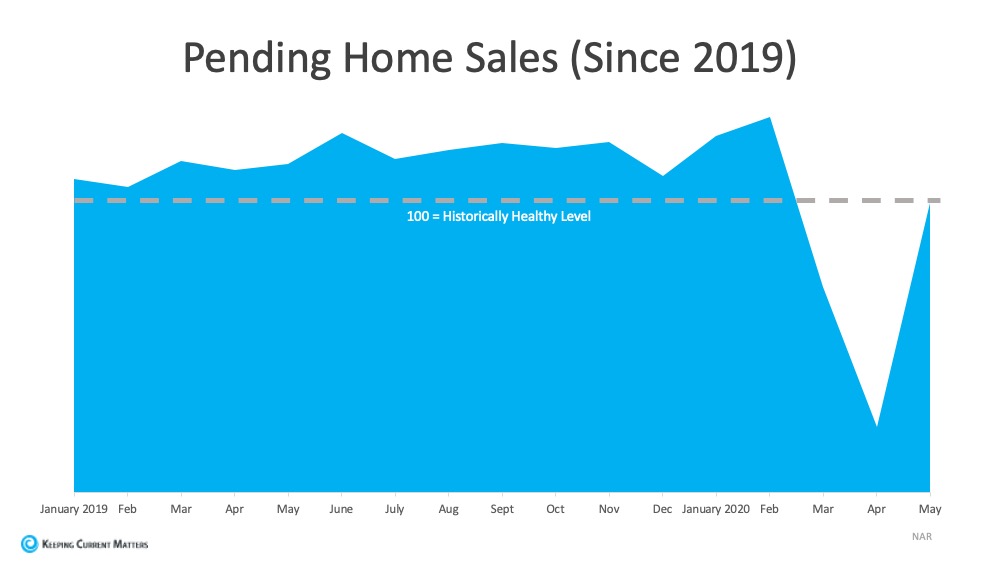
Pending Home Sales increased by 44.3% in May, registering the highest month-over-month gain in the index since the National Association of Realtors (NAR) started tracking this metric in January 2001. So, what exactly are pending home sales, and why is this rebound so important?

A Historic Rebound for the Housing Market

According to NAR, the Pending Home Sales Index (PHS) is:

“A leading indicator of housing activity, measures housing contract activity, and is based on signed real estate contracts for existing single-family homes, condos, and co-ops. Because a home goes under contract a month or two before it is sold, the Pending Home Sales Index generally leads Existing-Home Sales by a month or two.”

In real estate, pending home sales is a key indicator in determining the strength of the housing market. As mentioned before, it measures how many existing homes went into contract in a specific month. When a buyer goes through the steps to purchase a home, the final one is the closing. On average, that happens about two months after the contract is signed, depending on how fast or slow the process takes in each state.

Why is this rebound important?

A Historic Rebound for the Housing Market | Keeping Current Matters

With the COVID-19 pandemic and a shutdown of the economy, we saw a steep two-month decline in the number of houses that went into contract. In May, however, that number increased dramatically (See graph below):This jump means buyers are back in the market and purchasing homes right now. Lawrence Yun, Chief Economist at NAR mentioned:

“This has been a spectacular recovery for contract signings and goes to show the resiliency of American consumers and their evergreen desire for homeownership…This bounce back also speaks to how the housing sector could lead the way for a broader economic recovery.”

But in order to continue with this trend, we need more houses for sale on the market. Yun continues to say:

“More listings are continuously appearing as the economy reopens, helping with inventory choices…Still, more home construction is needed to counter the persistent underproduction of homes over the past decade.”

A Historic Rebound for the Housing Market | Keeping Current Matters

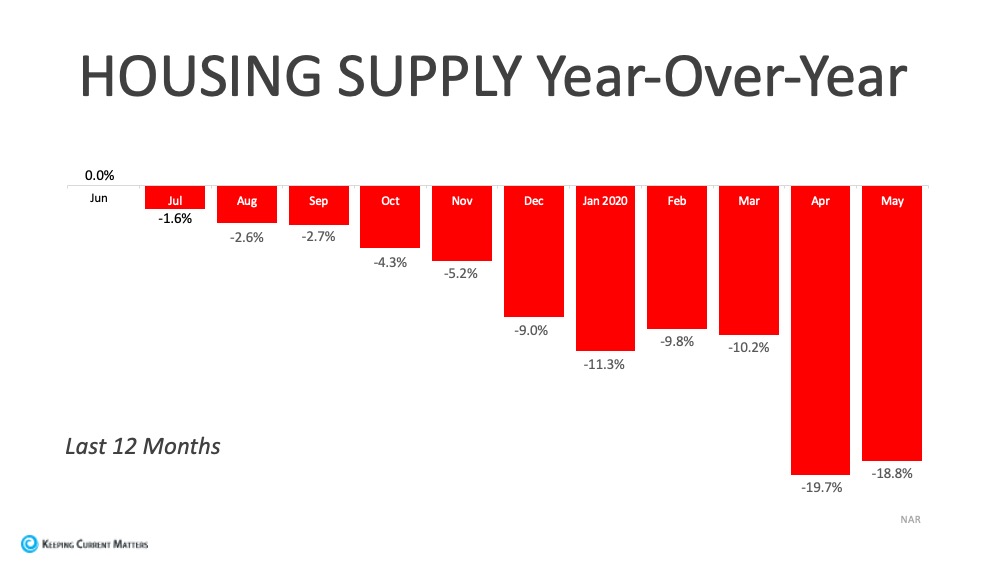
As we move through the year, we’ll see an increase in the number of houses being built. This will help combat a small portion of the inventory deficit. The lack of overall inventory, however, is still a challenge, and it is creating an opportunity for homeowners who are ready to sell. As the graph below shows, during the last 12 months, the supply of homes for sale has been decreasing year-over-year and is not keeping up with the demand from homebuyers.

Bottom Line

If you decided not to sell this spring due to the health crisis, maybe it’s time to jump back into the market while buyers are actively looking for homes. Reach out to a local real estate professional to determine your best move forward.

Americans are returning to the housing market, mortgage data shows

Purchase applications hit a five-week strideMay 20, 2020

Applications for mortgages to purchase homes gained for the fifth consecutive week while refinancings dropped, the Mortgage Bankers Association said in a Wednesday report.

MBA’s seasonally adjusted index measuring purchase applications rose 6% last week, according to the report. Applications for refinancings fell 6% from the prior week, though the level was 160% higher than a year ago, MBA said.

The consecutive weekly increases in purchase applications may be a sign the housing market is beginning to recover from the impact of COVID-19, said Joel Kan, MBA’s associate vice president of economic and industry forecasting.

“As states gradually reopen and both homebuyer and seller activity increases, we will be closely watching to see if these positive trends continue, or if they reflect shorter-term, pent-up demand,” Kan said.

Refinance activity fell to its lowest level in over a month despite mortgage rates remaining close to record lows. The average loan amount for refinances hit its lowest level since January, according to the report. 

The low interest rates should result in an increase in refi applications for borrowers who still have jobs, Kan said.

“We still expect a strong pace of refinancing for the remainder of the year because of low mortgage rates,” Kan said. “With many homeowners still facing economic and employment uncertainty, these refinance opportunities will allow them to save money on their monthly payments, which can then be used to help other areas of their budgets.”

The Market Composite Index, a measure of overall application volume, decreased 2.6% on a seasonally adjusted basis from the prior week. Government purchase applications, which include Federal Housing Association loans, Veterans Administration loans, and United States Department of Agriculture loans, were 5% higher than a year ago.

Here is a more detailed breakdown of this week’s mortgage application data:

  • The FHA’s share of mortgage apps remained unchanged from the week prior at 11.5%.
  • The VA share of applications fell from 13.7% to 13.4%.
  • The USDA share of total applications increased from 0.6% to 0.7%.
  • Mortgage interest rates for 30-year fixed-rate mortgages with conforming loan balances ($510,400 or less) fell to 3.41% from 3.43% the week before.
  • The average contract interest rate for 30-year fixed-rate mortgages with jumbo loan balances (greater than $510,400) fell to 3.66% from 3.69%.
  • The average contract interest rate for 30-year fixed-rate mortgages backed by the FHA increased from 3.37% to 3.46%.
  • The average contract interest rate for 15-year fixed-rate mortgages decreased from 2.92% to 2.88%.
  • The average contract interest rate for 5/1 ARMs decreased to 3.19% at 3.26%.

click here to see original post.